These screenshots were captured from the production demo account and show how Binder is organized across planning, daily homeschool tools, records, file management, and account settings.
Each screenshot includes what the page is for, how a parent uses it, and the setup behind the feature. Use this as documentation source material for help center articles, sales demos, onboarding, and support replies.
Use
Describes the normal parent workflow: where to click, what to review, and what the page helps them decide.
Setup
Explains what needs to exist first, such as children, subjects, uploaded files, or a Scholar subscription.
Demo notes
The images use the C.S. Lewis demo household, including Peter, Susan, Edmund, Lucy, and the Cair Paravel demo data set.
Planning and lessons
Binder starts with the weekly rhythm: review the dashboard, organize subjects, plan lessons, and keep each student's work visible.
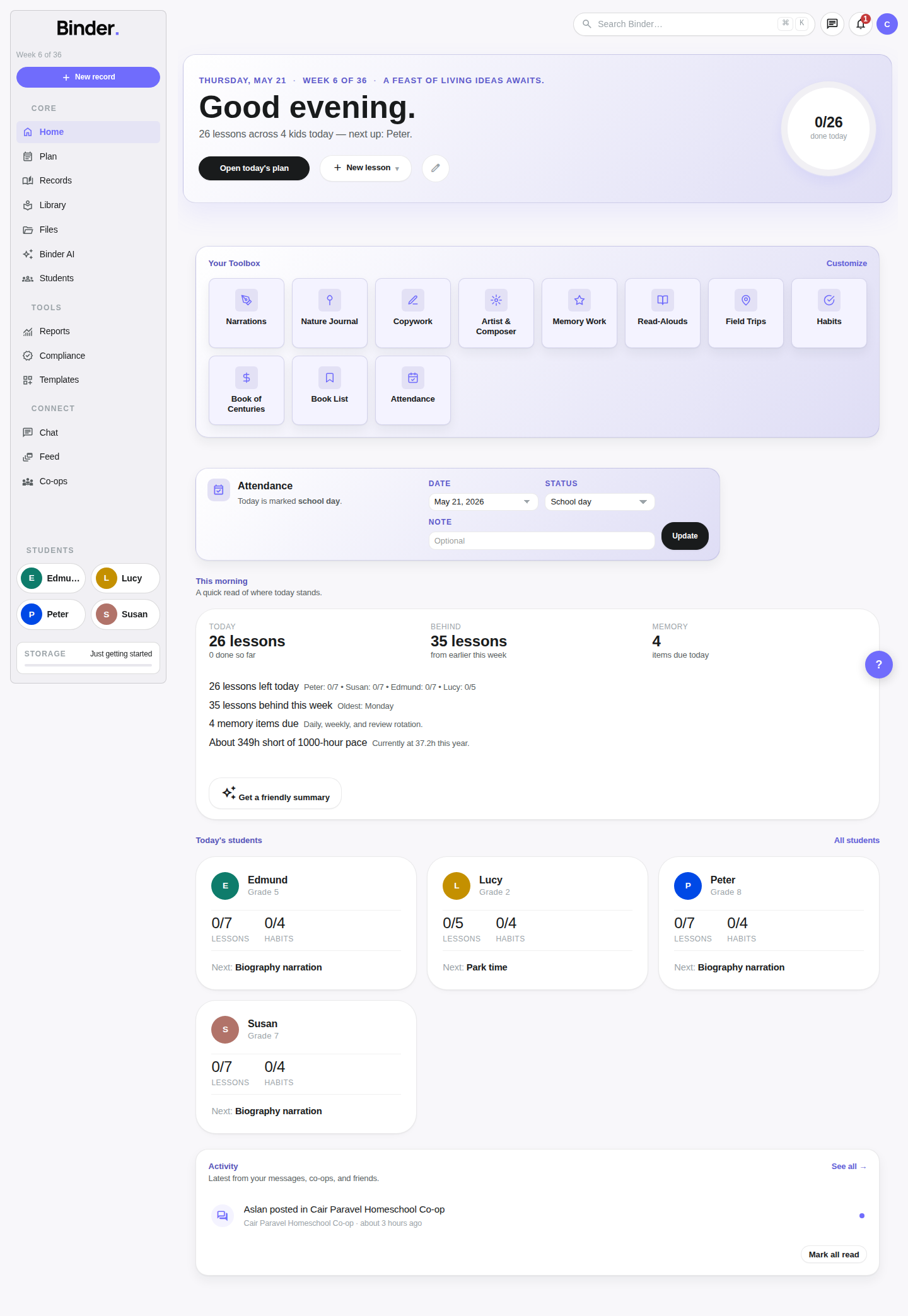
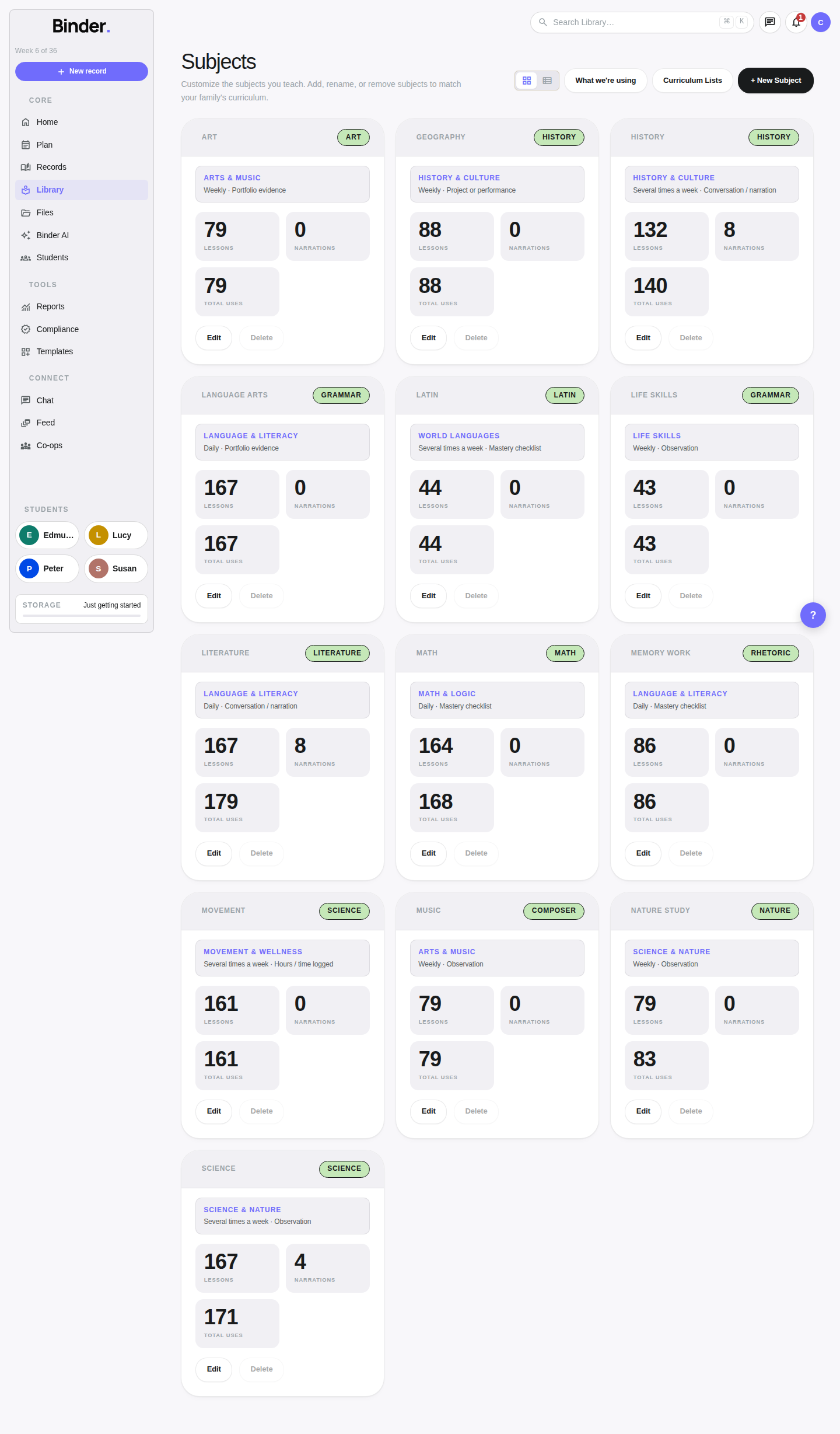
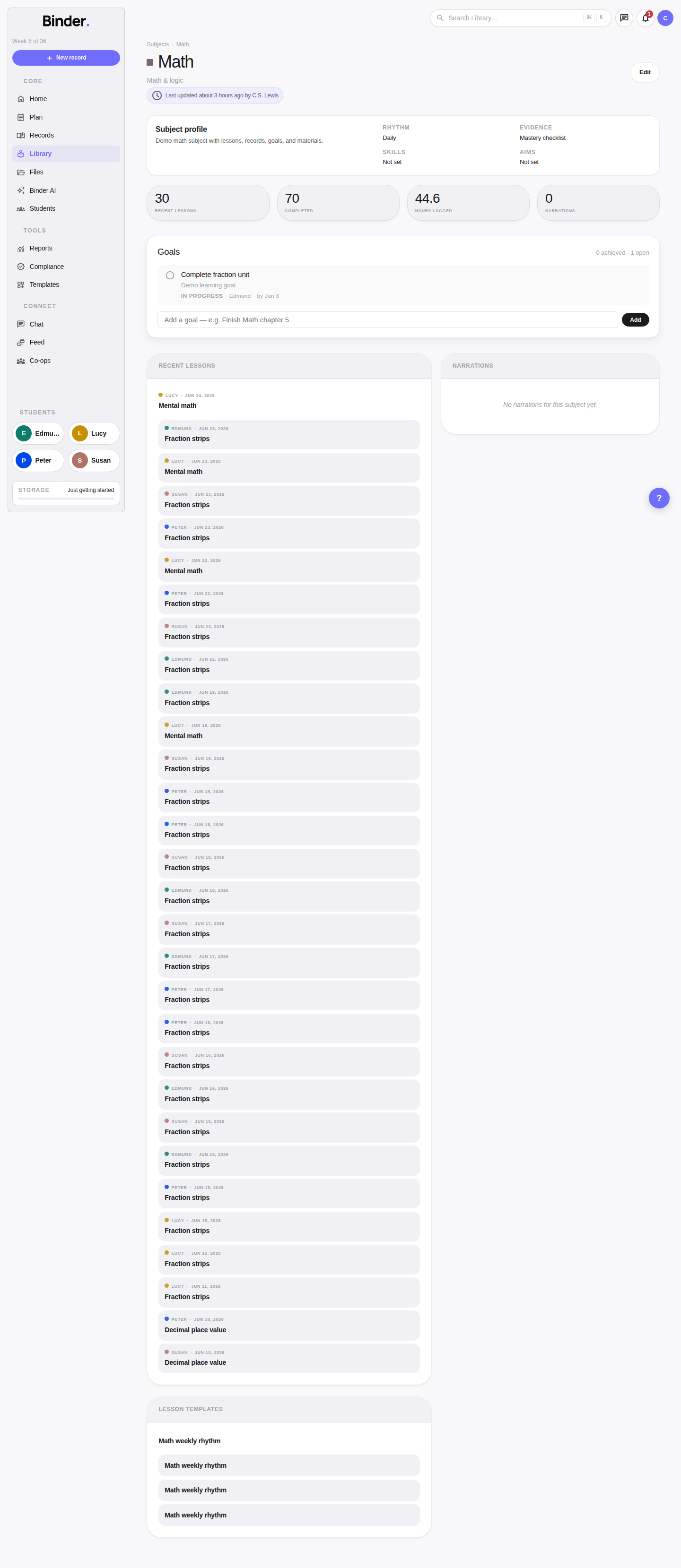
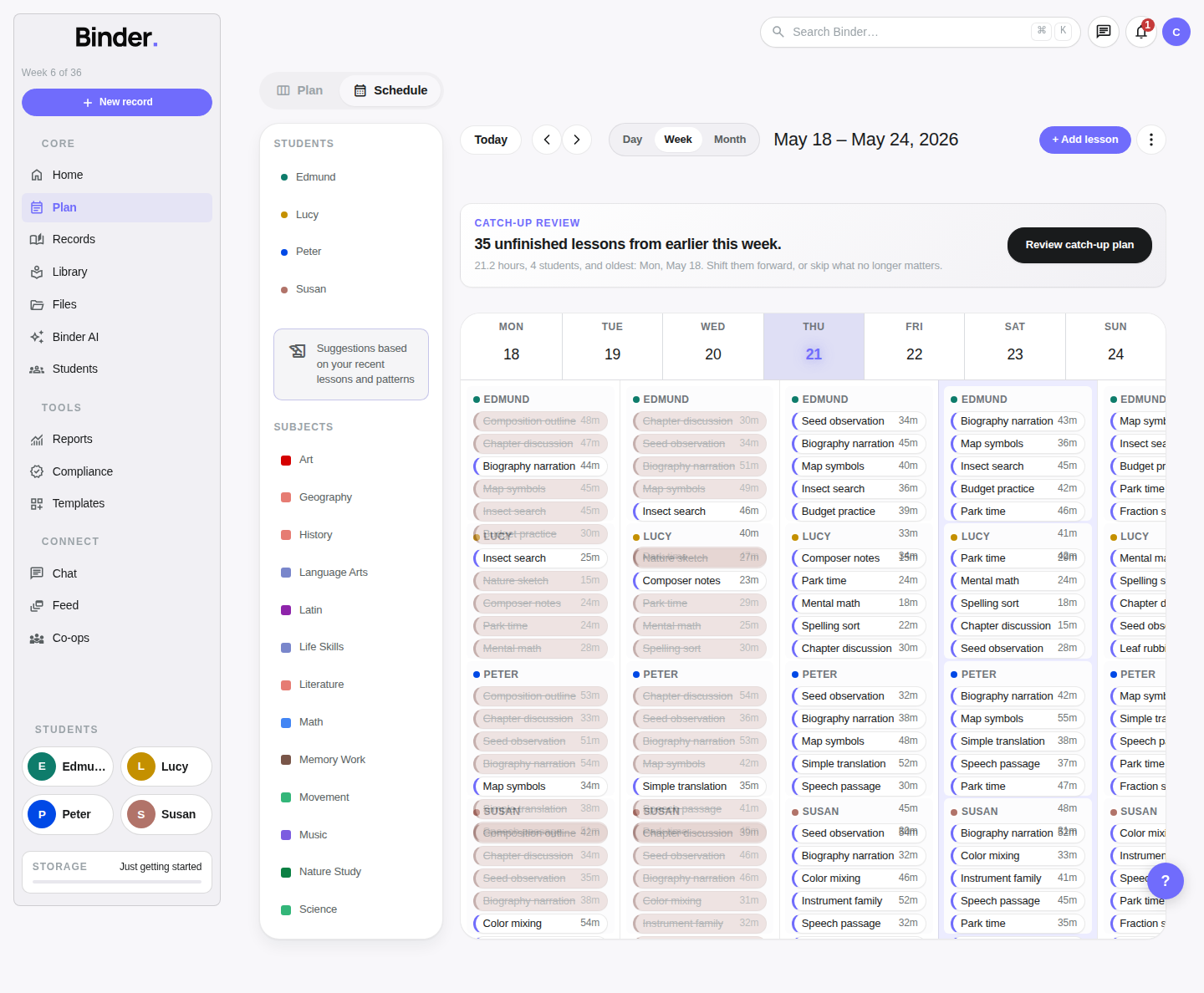
Dashboard. Use this as the family command center. Parents check today's lessons, upcoming priorities, habit progress, and recent records. Set it up by adding children, subjects, terms, and a few planned lessons.Subjects library. Subjects group lessons and power reporting. Create subjects for each family or child, then attach lessons, goals, materials, and curriculum notes.Subject detail. Use a subject page to review the scope of work for one area such as literature, math, or history. This is where parents see lessons, goals, and subject-specific activity together.Week planner. Plan lessons by day and child, move unfinished work, copy a week, or print a schedule. It works best after children, subjects, and term dates are configured.Child lessons. Each student has a focused lesson list. Use it to see what one child has planned, completed, skipped, or still needs attention.
Files and search
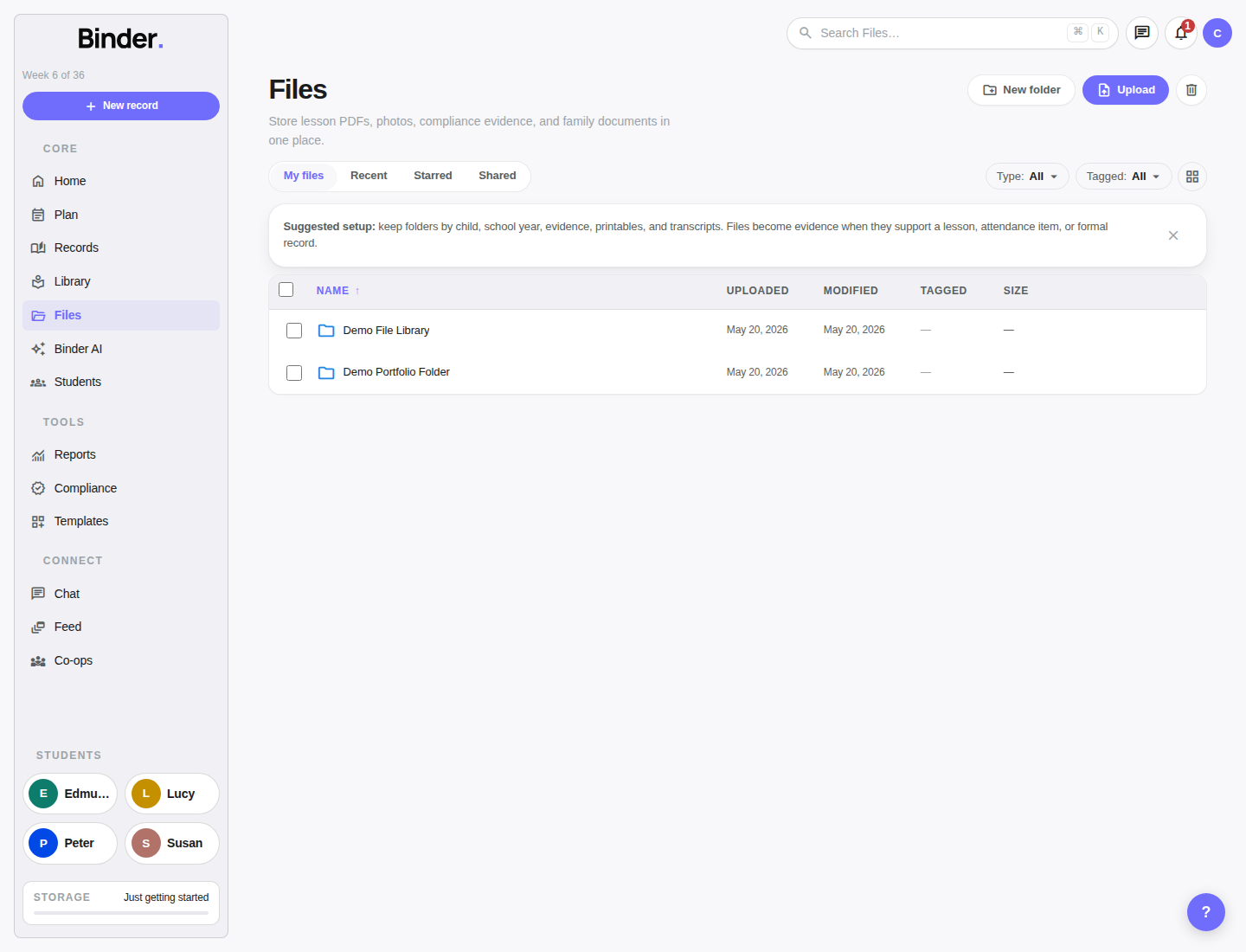
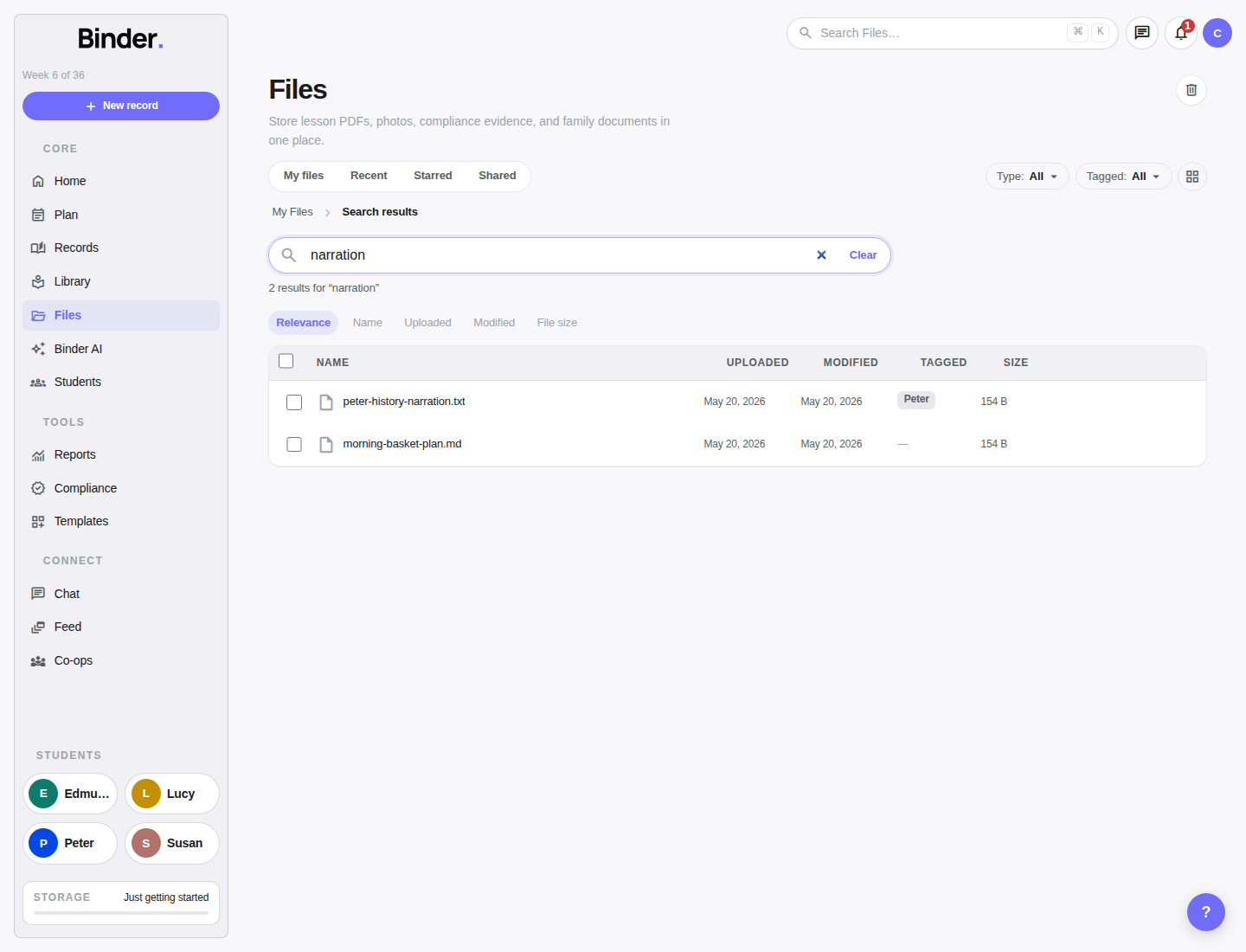
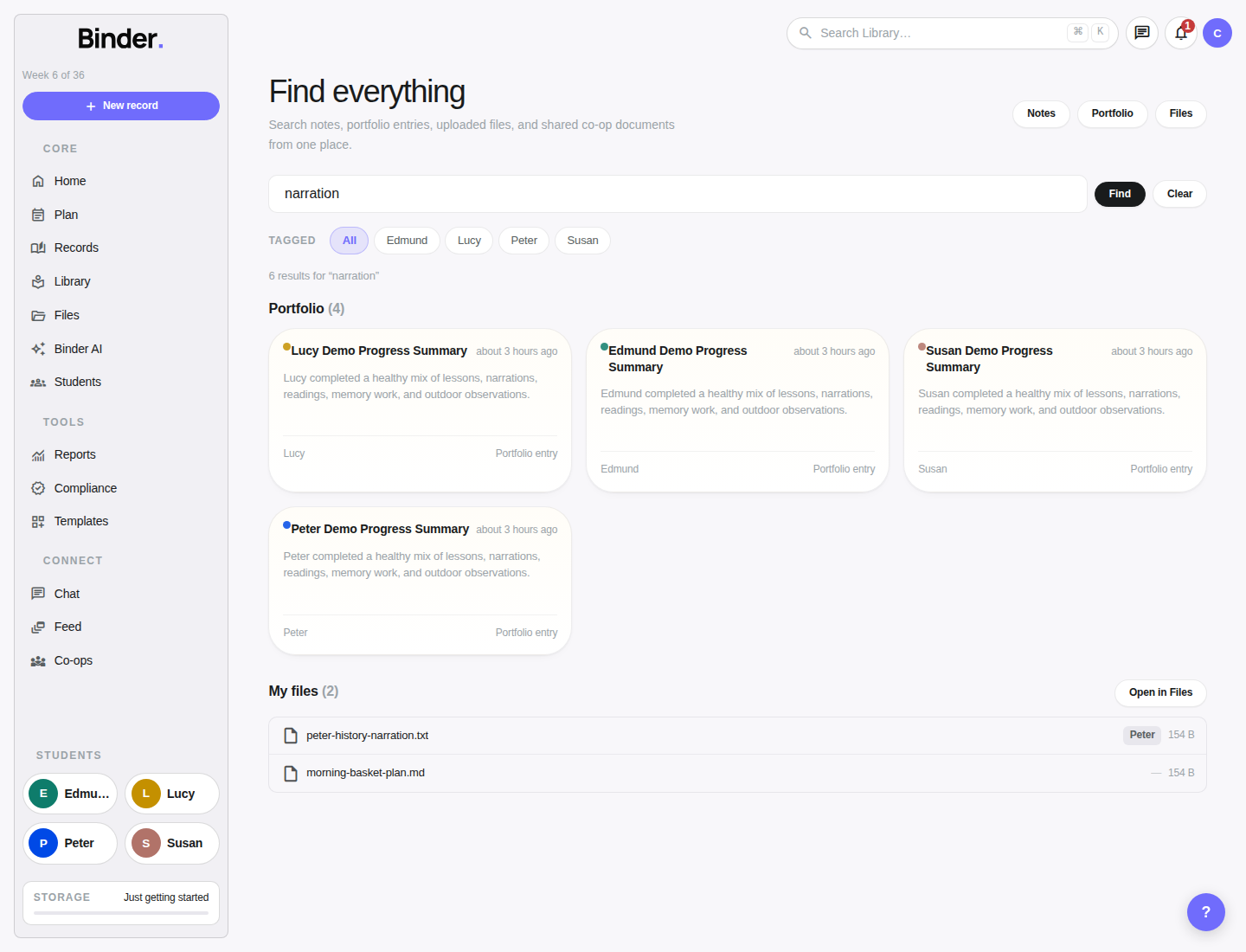
The file manager keeps worksheets, portfolio evidence, CSVs, Markdown notes, and records organized in one searchable library.
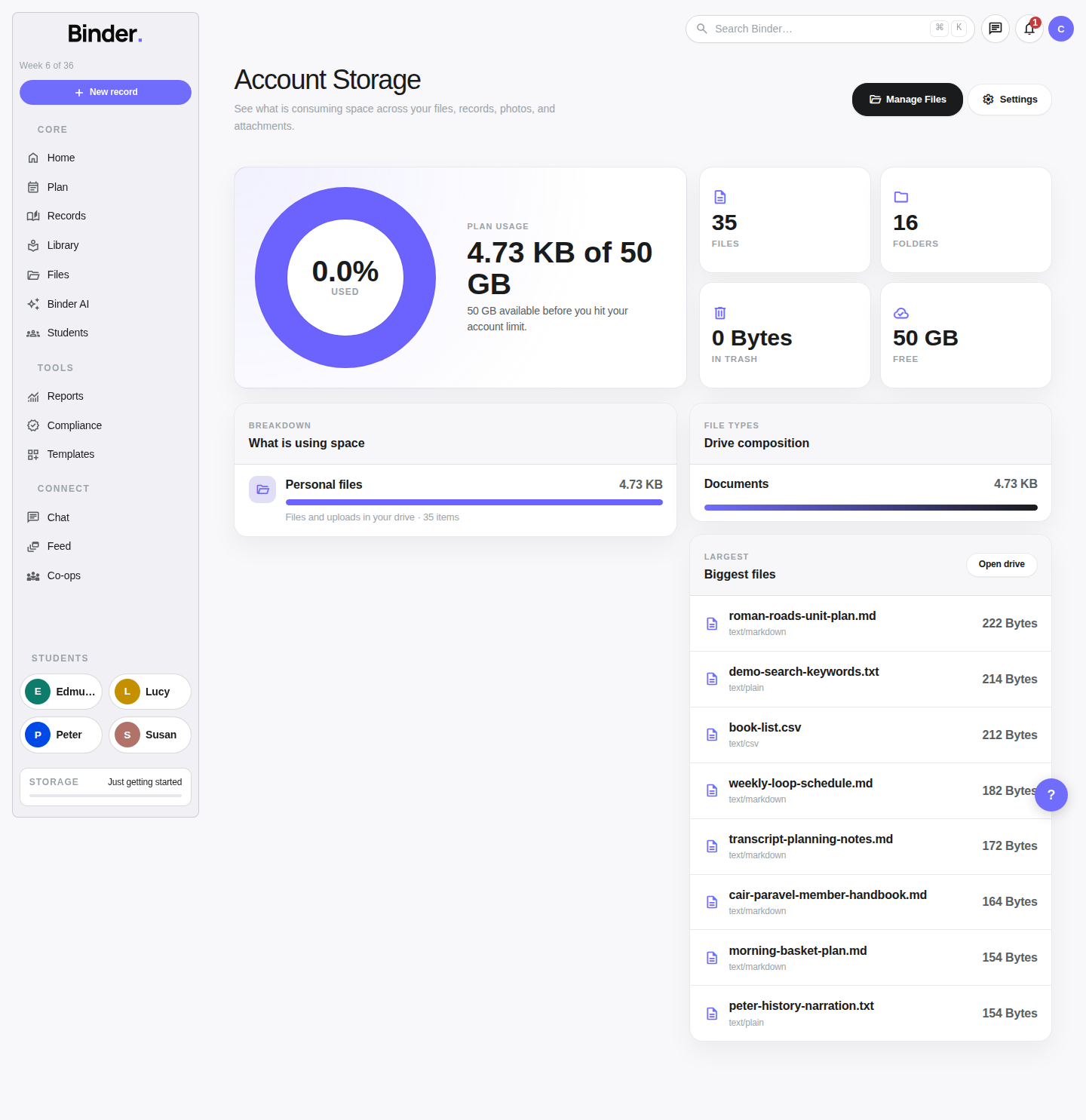
File manager. Upload files, create folders, star important documents, tag files to children, and browse by recent activity. Demo data includes nested folders, starred files, and per-student work samples.File search. Search by filename or indexed text. Use this to find narrations, attendance summaries, lesson plans, and portfolio evidence without remembering folder location.Library search. The broader library search pulls together uploaded files, subjects, records, and other learning resources. It is the fastest way to jump across Binder's content areas.Storage usage. Account storage shows how much space is used by personal files, evidence, and other uploads. This helps families understand plan limits before they hit a quota.
Records, attendance, and compliance
Binder turns daily activity into durable homeschool records: attendance, portfolio artifacts, reports, transcripts, and long-form documentation.
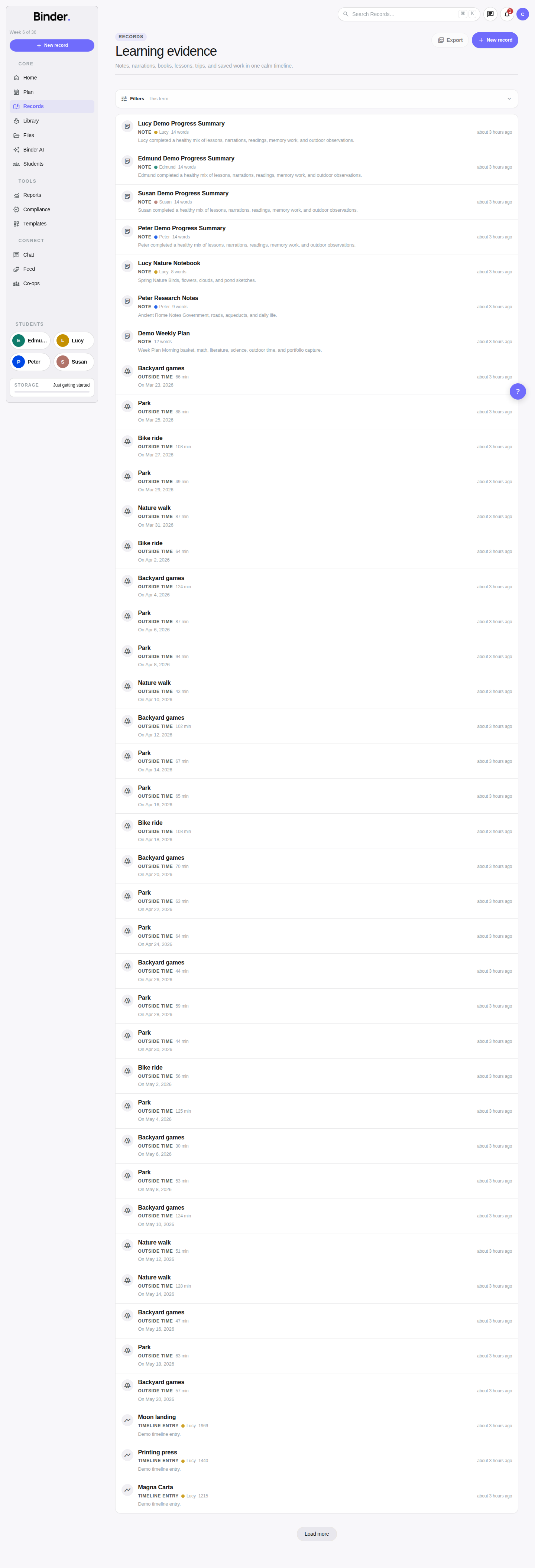
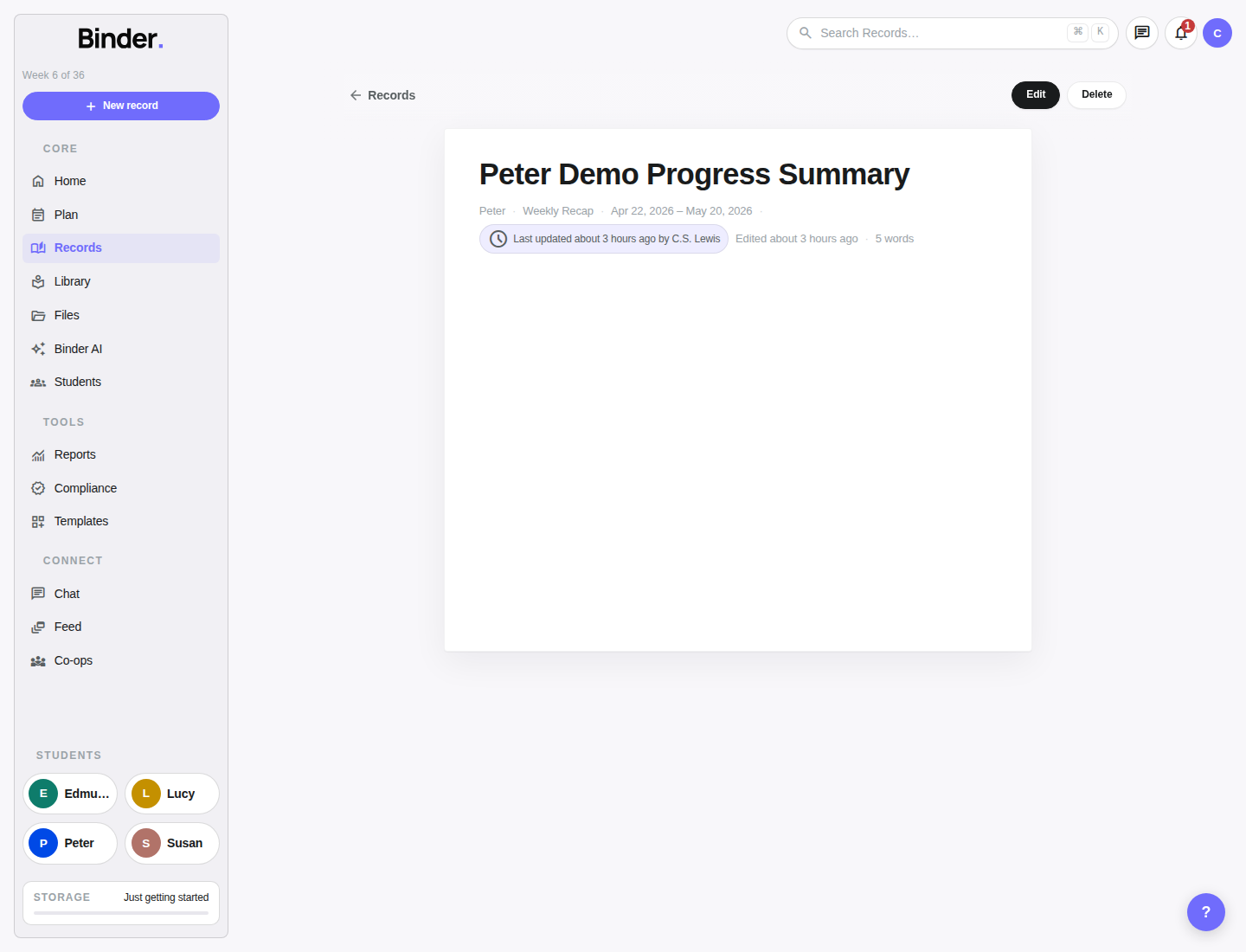
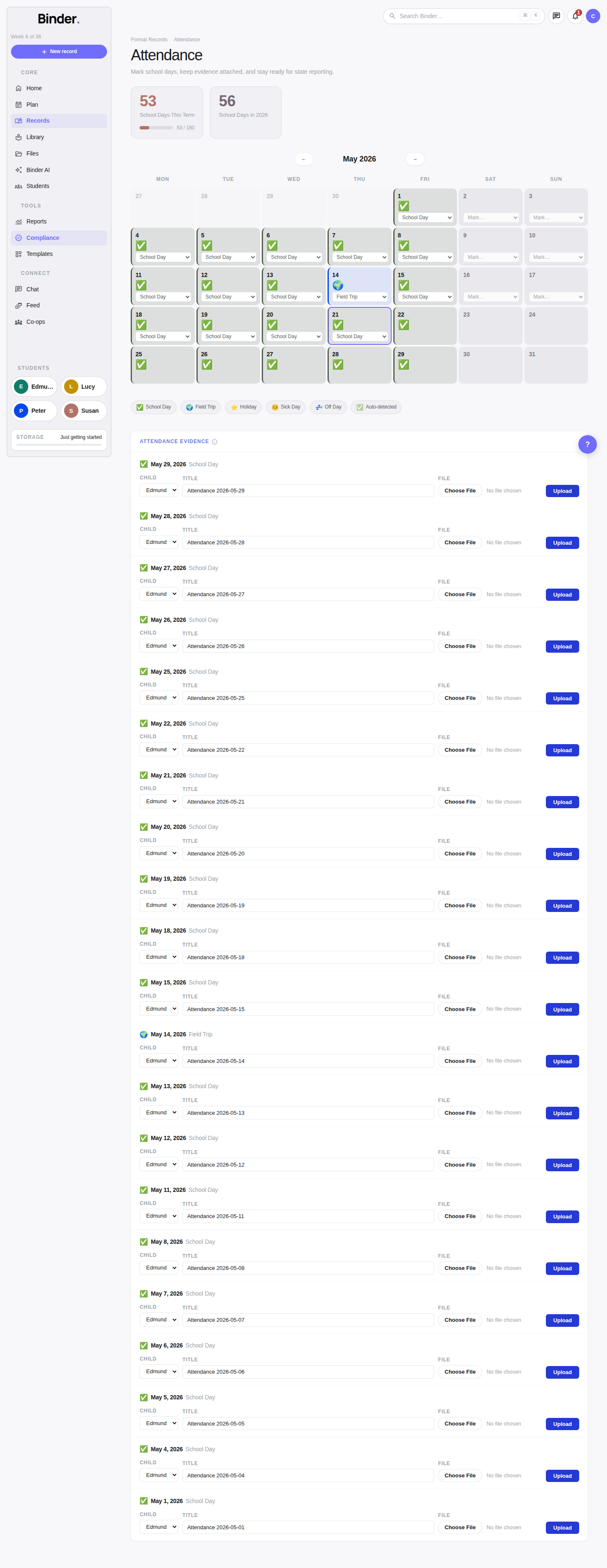
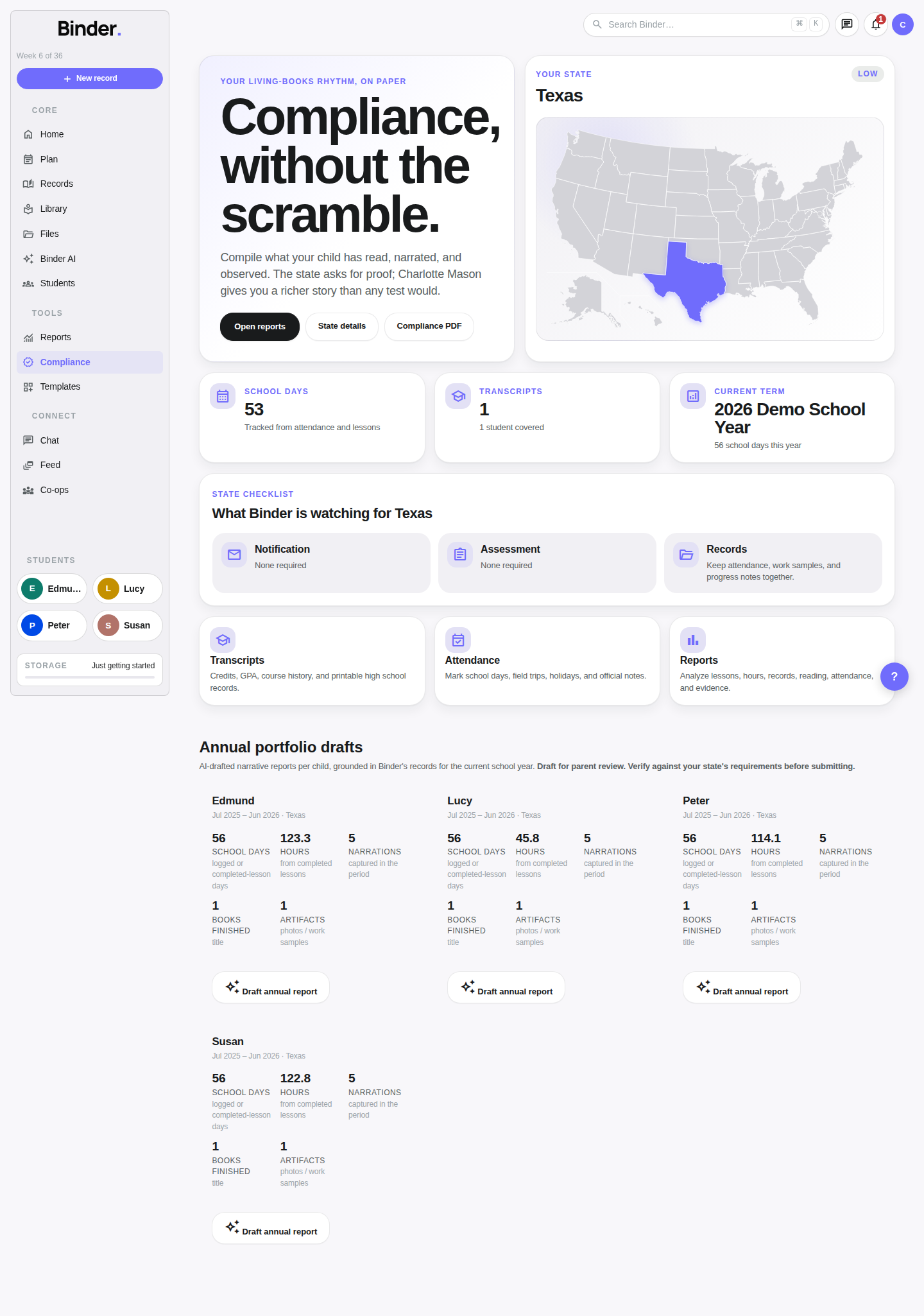
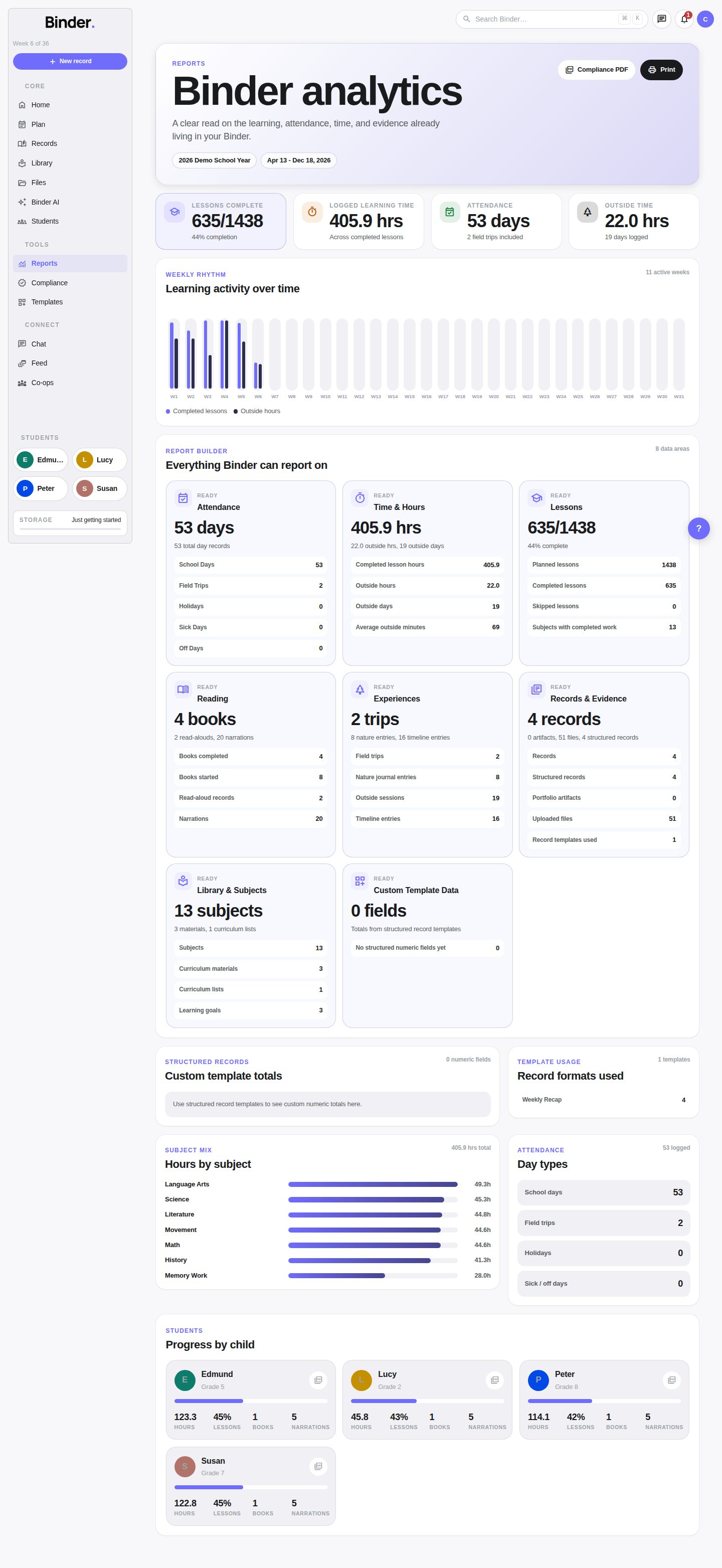
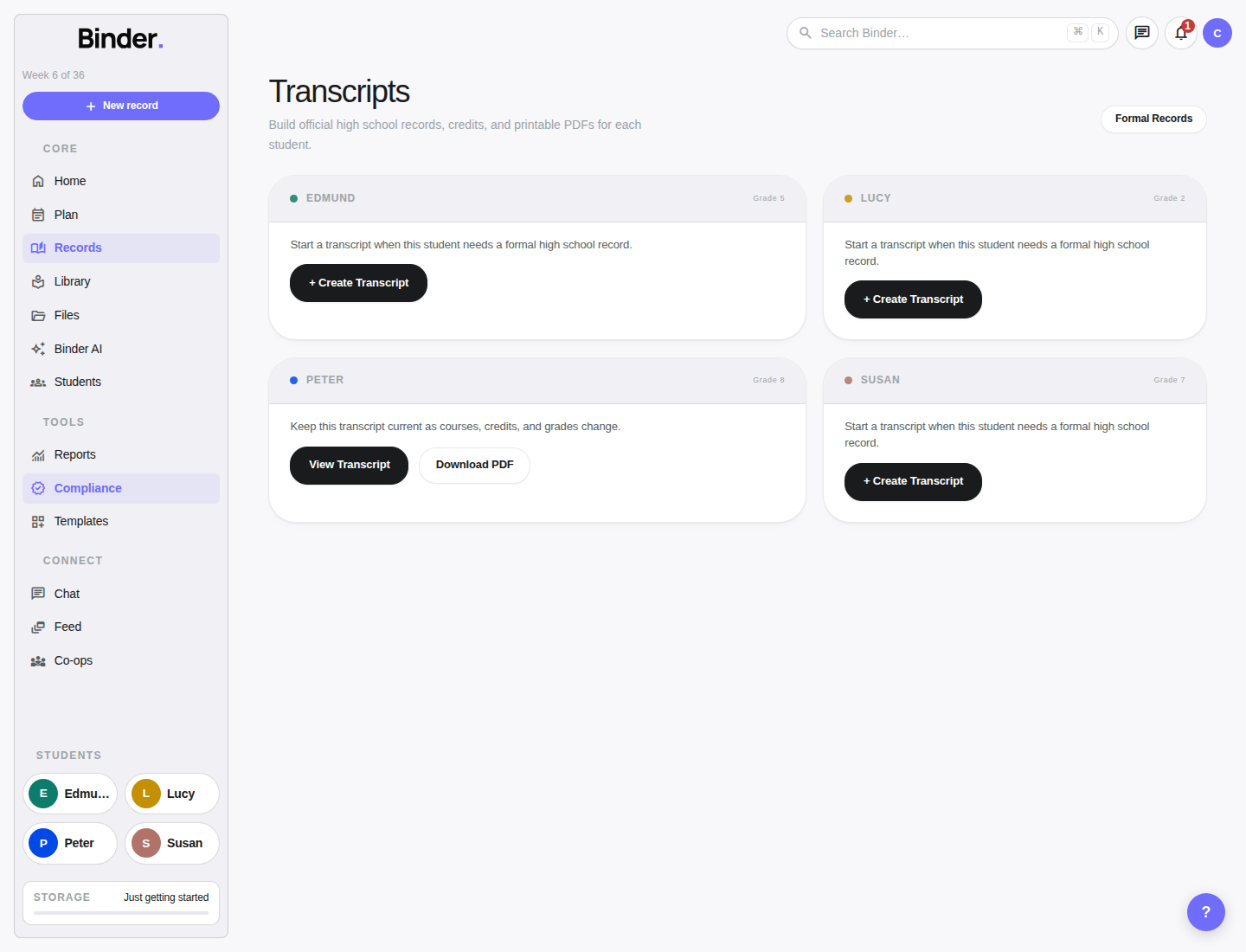
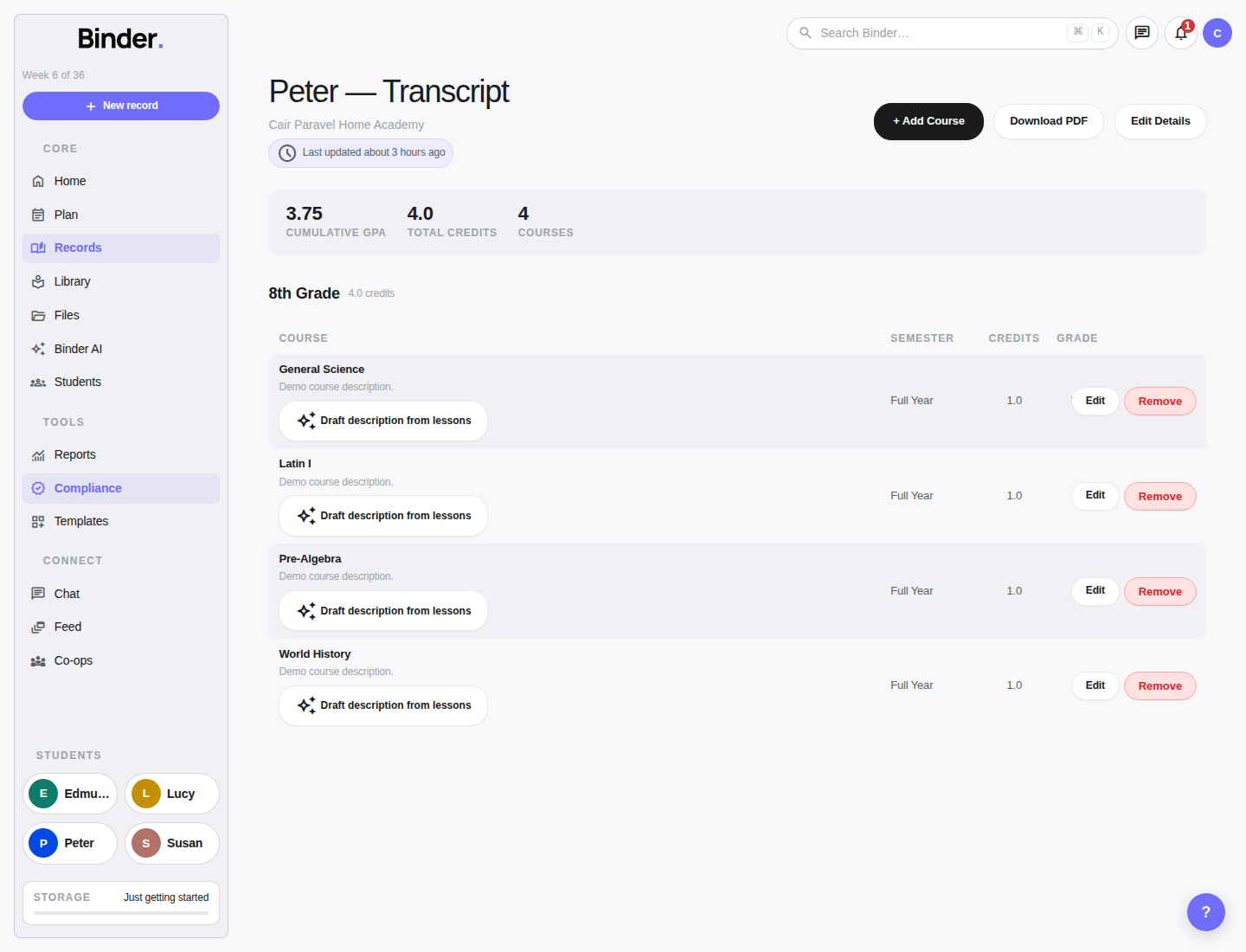
Records and portfolio. Review logged learning in one feed, then create narrative records or portfolio entries. Setup comes from completed lessons, daily logs, narrations, field trips, and attached evidence.Record detail. Rich records are used for reviews, term summaries, compliance notes, and portfolio narratives. Parents can draft, revise, and connect supporting evidence.Attendance. Mark school days, holidays, sick days, and vacation days. Attendance works with terms and compliance profiles so families can track progress toward state requirements.Compliance profile. Set a state profile and track required days, hours, and subjects. Binder provides planning support, not legal advice.Reports. Reports summarize lessons, subjects, hours, attendance, and progress. Use them at the end of a month, term, or year to prepare parent reviews or evaluator packets.Transcripts. Scholar accounts can create high-school transcripts. Start from a child, school name, graduation date, and course list.Transcript detail. Add courses, credits, grades, and descriptions. Binder totals credits and GPA so parents can export a clean academic record.
Daily homeschool tools
Daily tools capture the work that does not always fit a standard lesson grid: reading, narrations, habits, nature, field trips, memory work, timelines, and cultural studies.
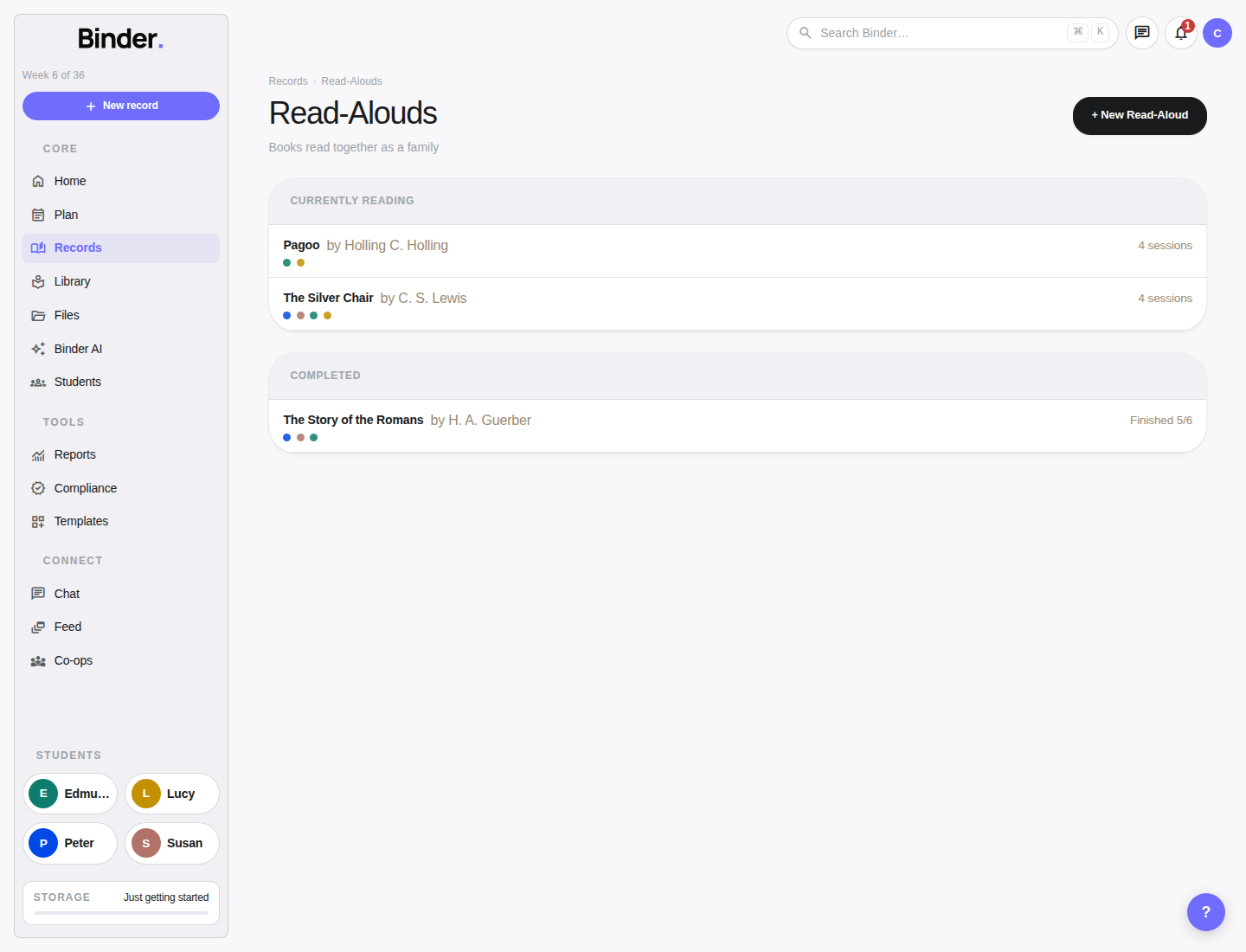
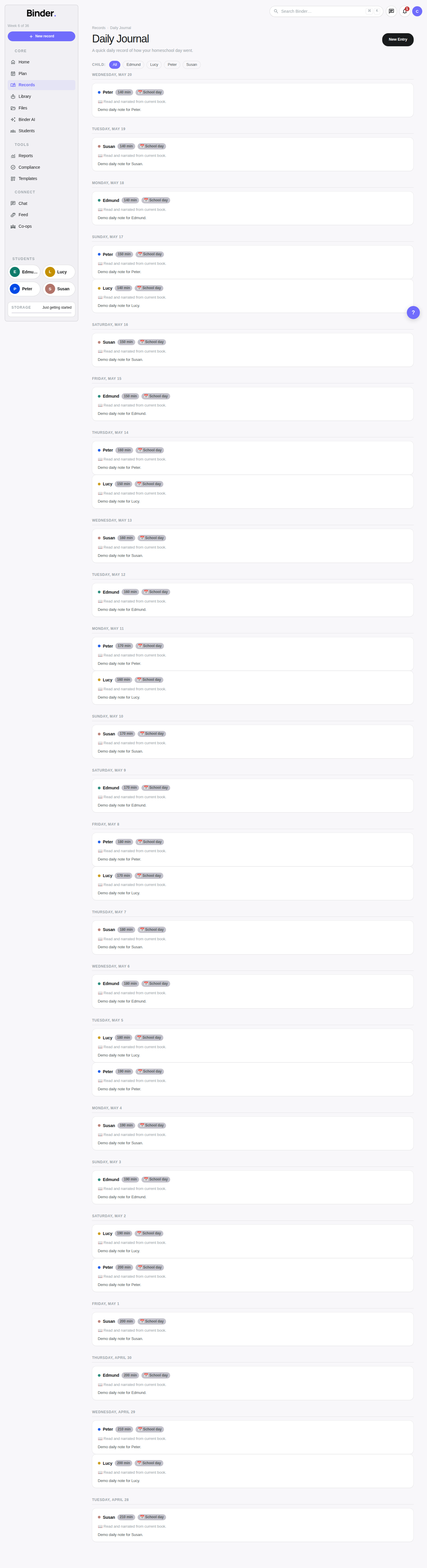
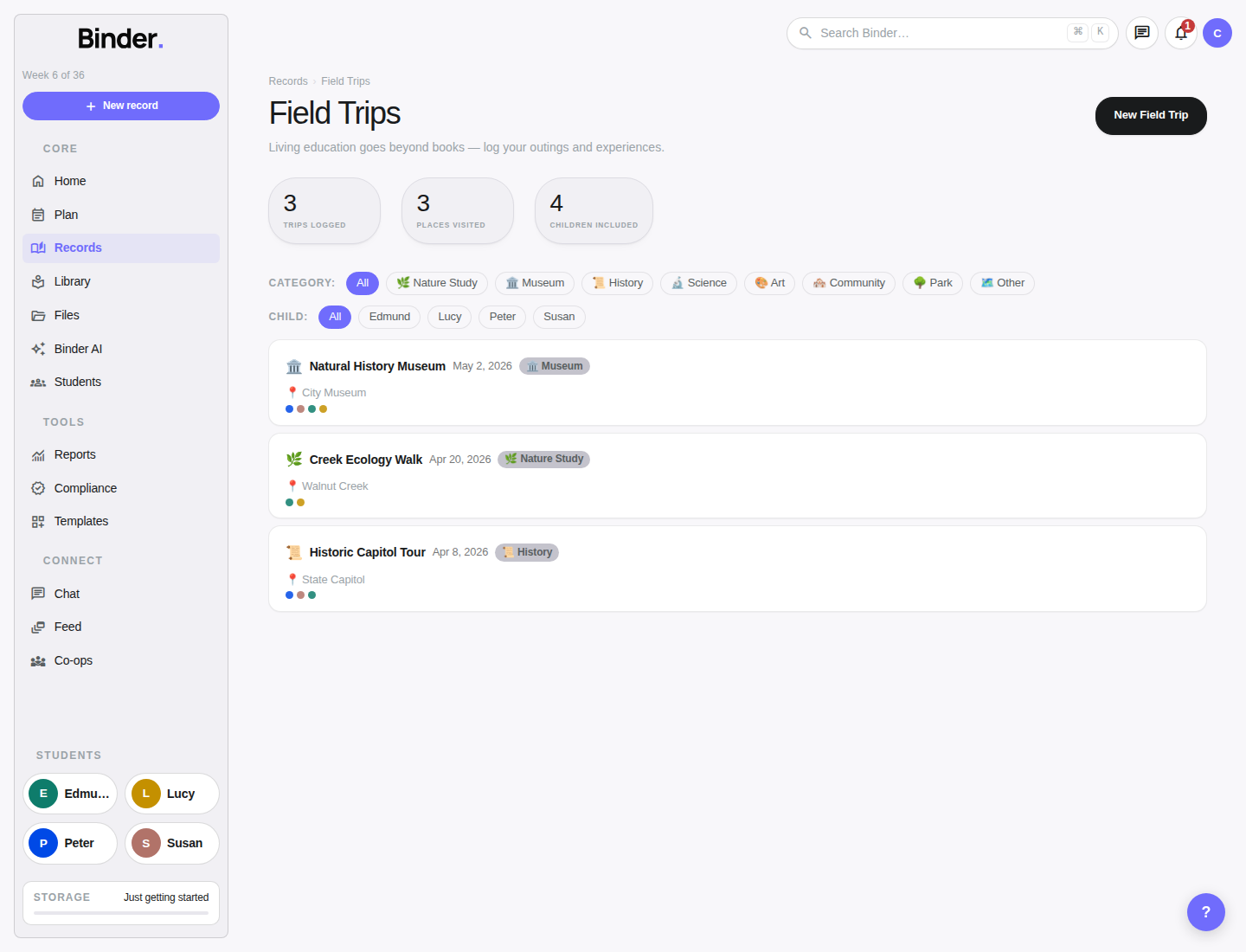
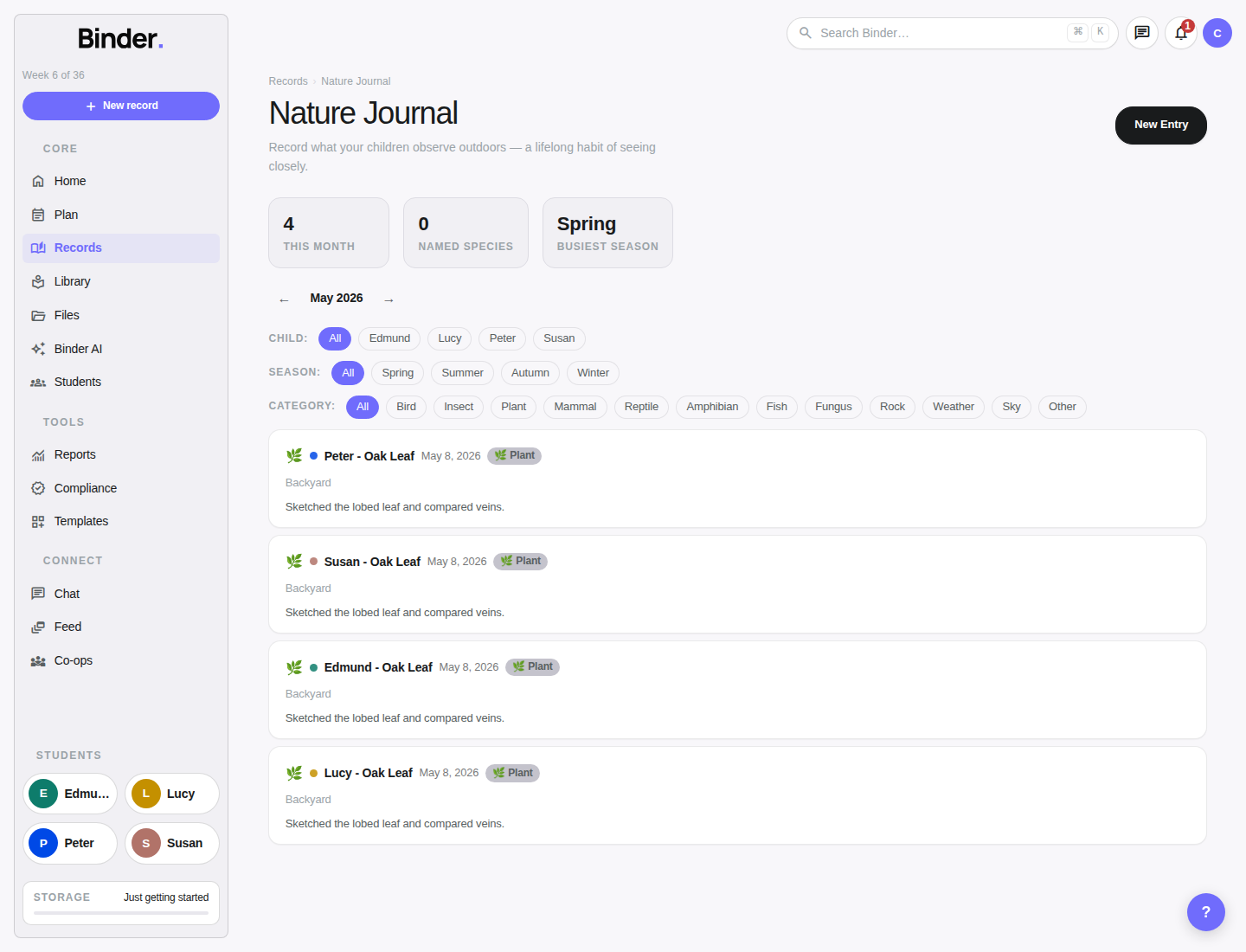
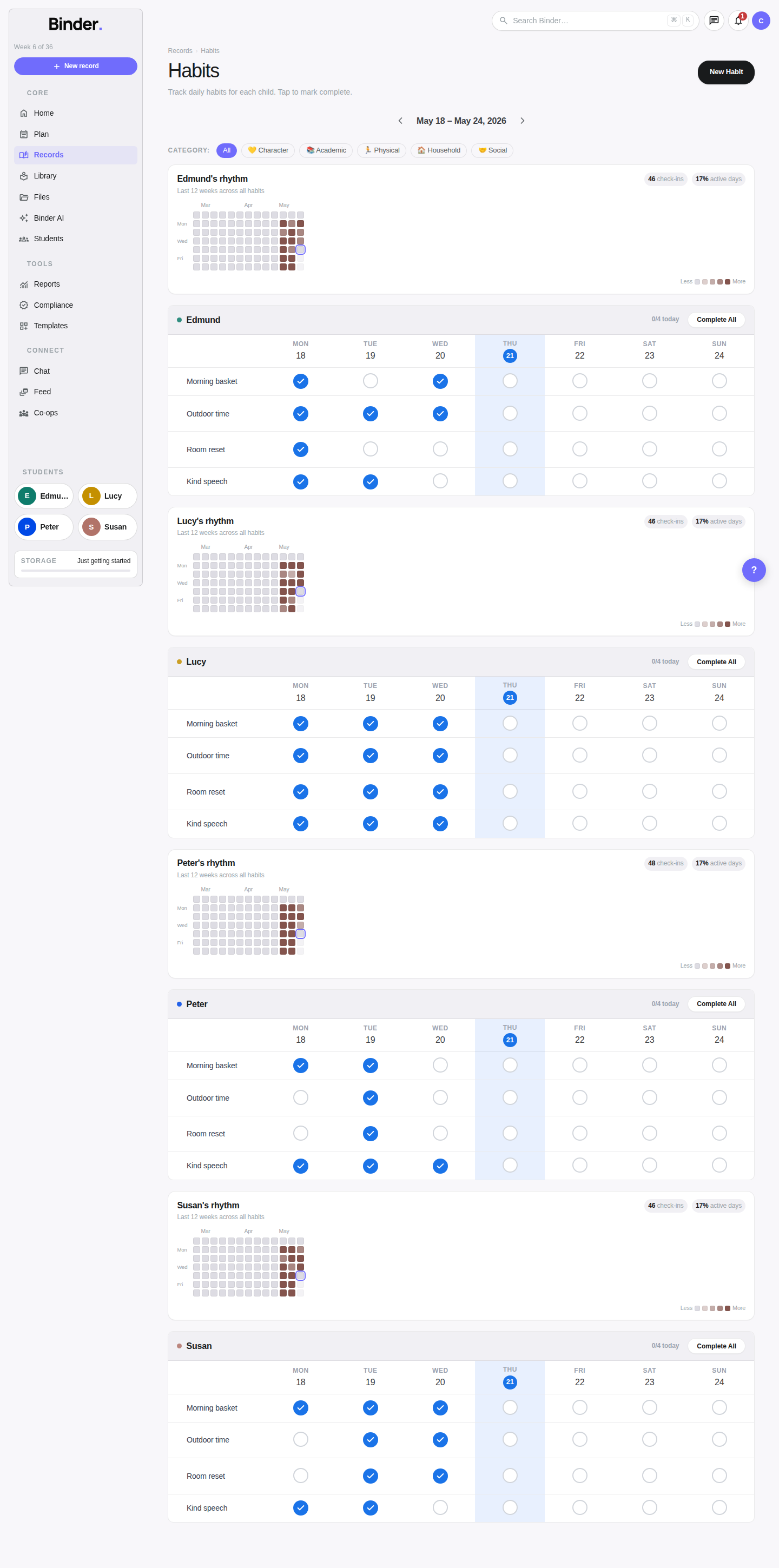
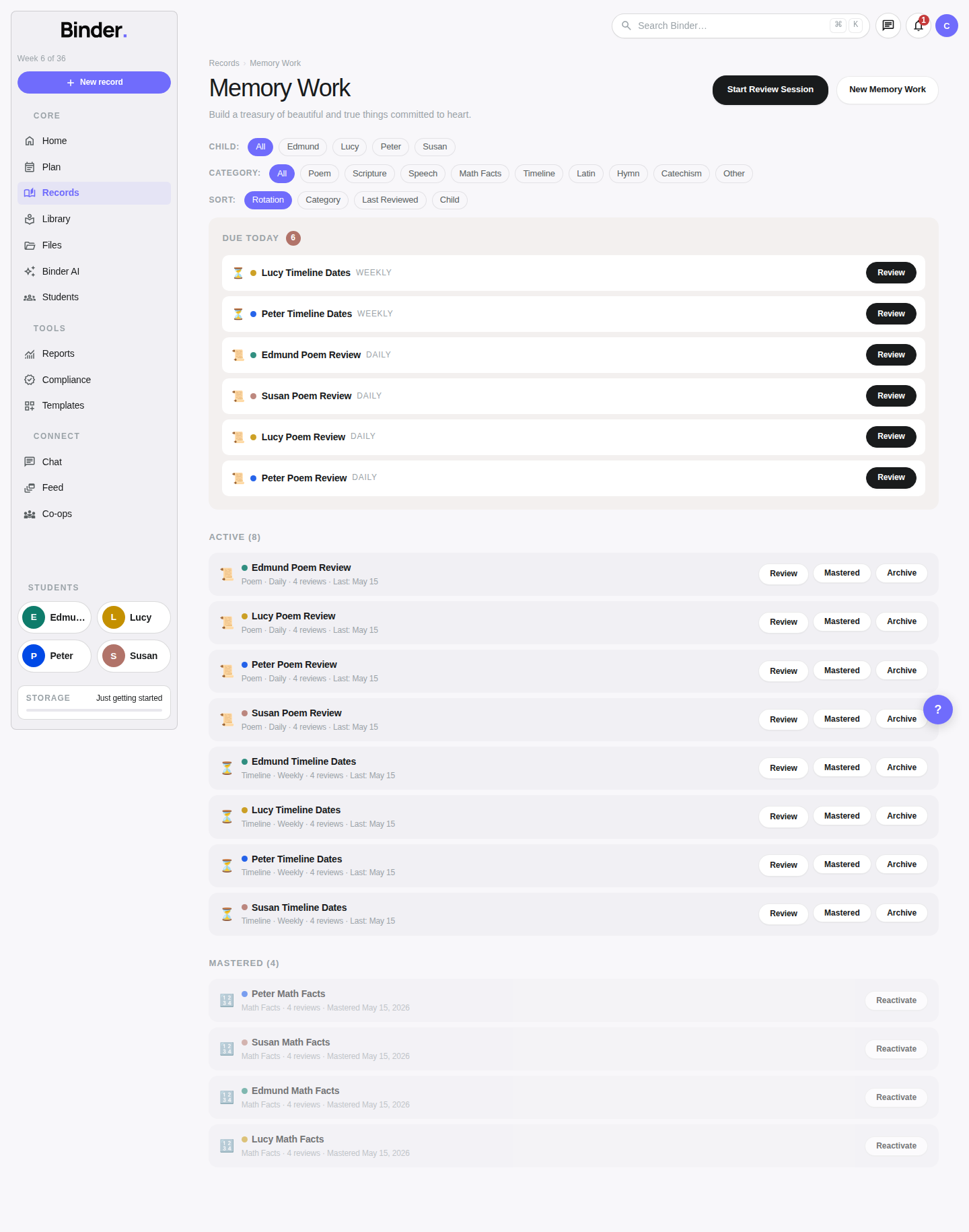
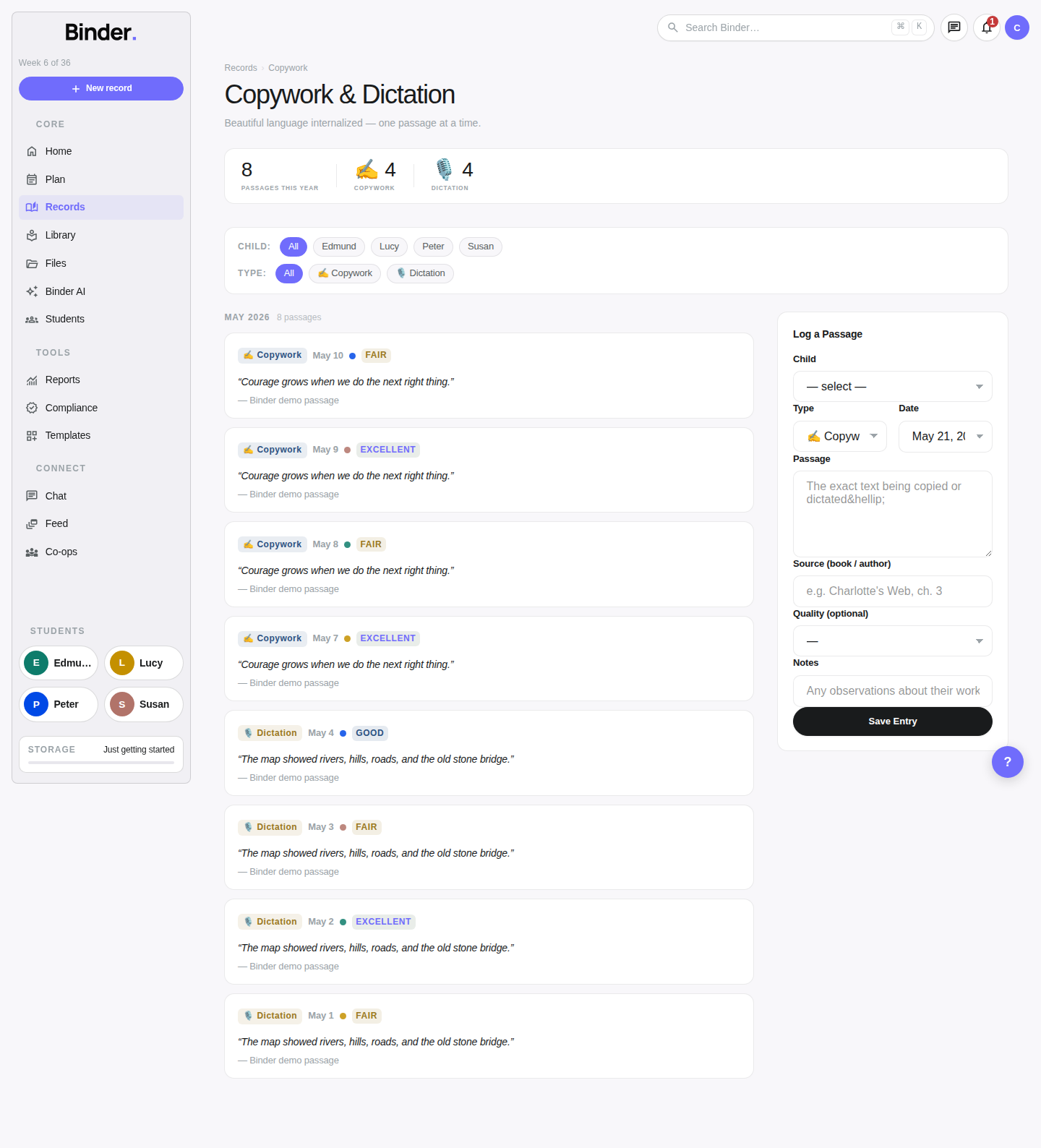
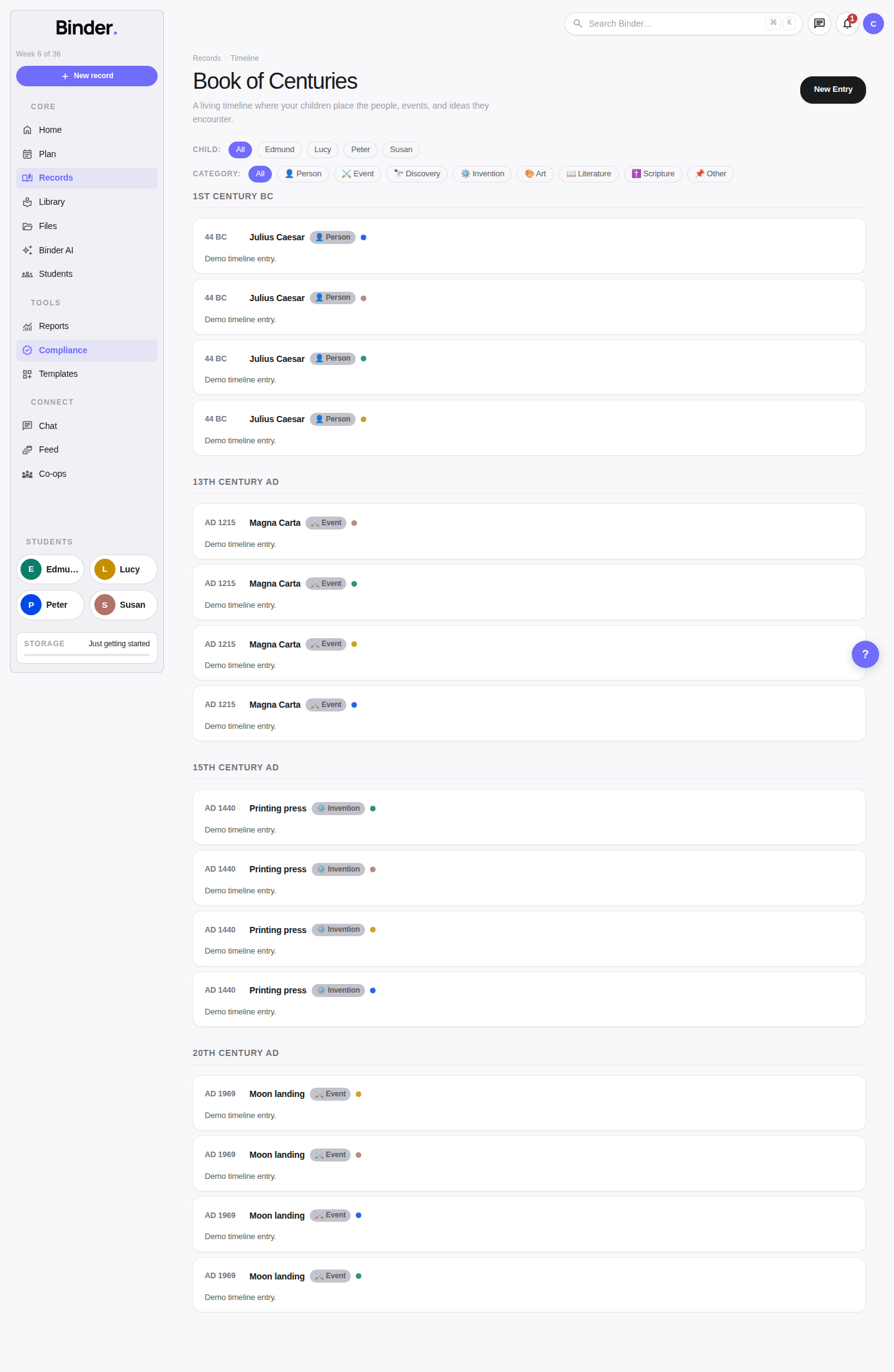
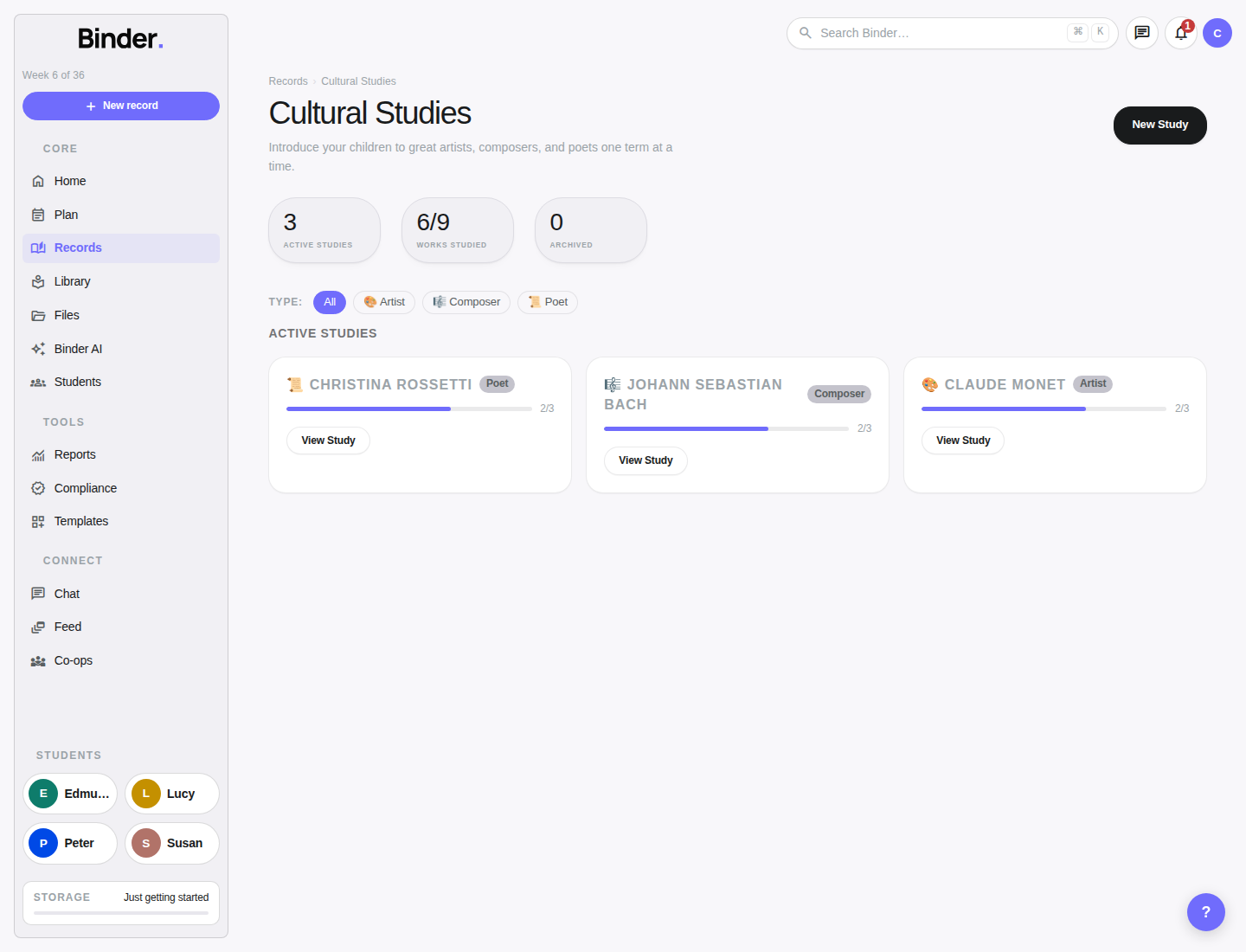
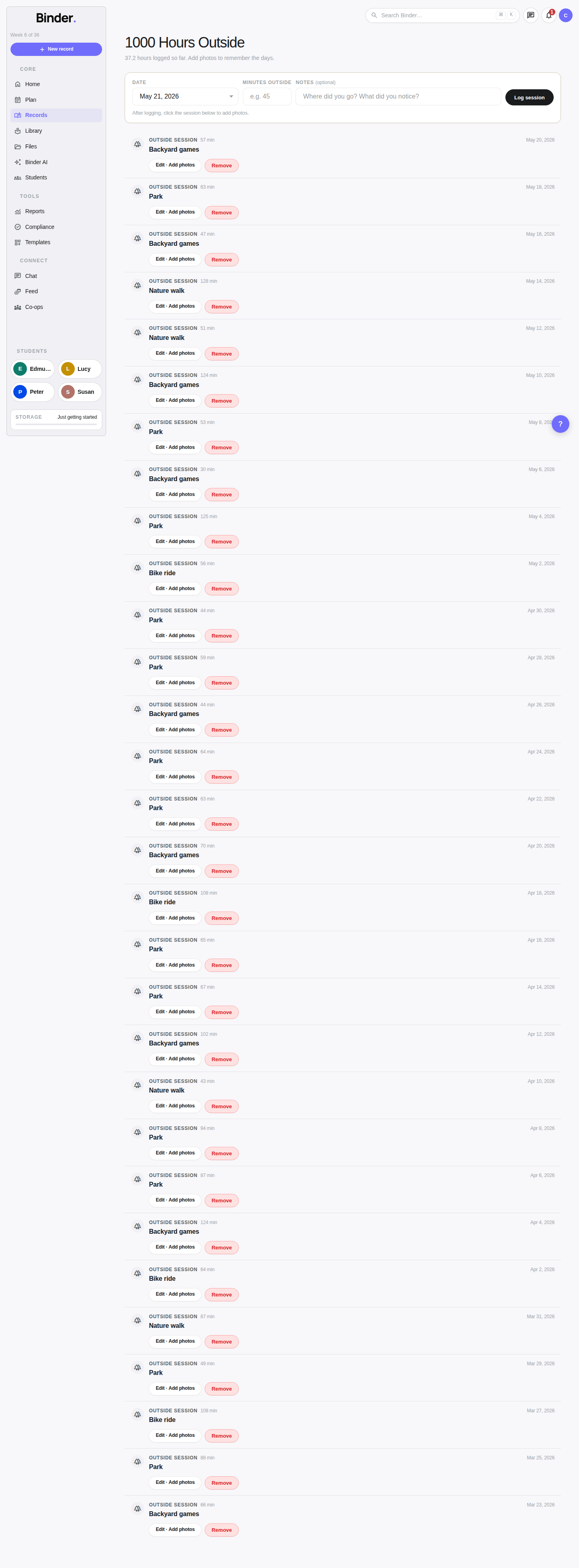
Books. Track what each child is reading, the current status, and dates. Book records feed portfolio and progress conversations.Read-alouds. Log books read to multiple children at once. Add sessions to track date, duration, chapters, and notes.Read-aloud detail. Use this page to review progress through one shared book and the children included in it.Daily logs. Capture a quick end-of-day summary for each child. Daily logs help preserve the real story of a homeschool day.Field trips. Record outings with dates, locations, categories, notes, and photos. These become portfolio evidence and compliance support.Nature study. Track observations by child, category, location, season, and weather. This is especially useful for Charlotte Mason and outdoor learning workflows.Nature entry detail. Review one observation and its supporting notes. Add enough detail for later portfolio or subject review.Habits. Track repeatable practices by child, such as morning routine, instrument practice, or copywork. Habits can be toggled without turning everything into a grade.Memory work. Store verses, poems, facts, speeches, or passages and review them with a spaced repetition rhythm.Copywork. Log copied or dictated passages with source, child, and notes. This supports handwriting, spelling, grammar, and close reading records.Timeline. Add events to a Book of Centuries or history timeline. Timeline entries connect historical study across children and subjects.Cultural studies. Track artists, composers, works studied, and notes. Set this up by adding a study and marking individual works as complete over time.Outside time. Log outdoor sessions, duration, and notes for families who track nature time or outdoor learning goals.
Binder AI
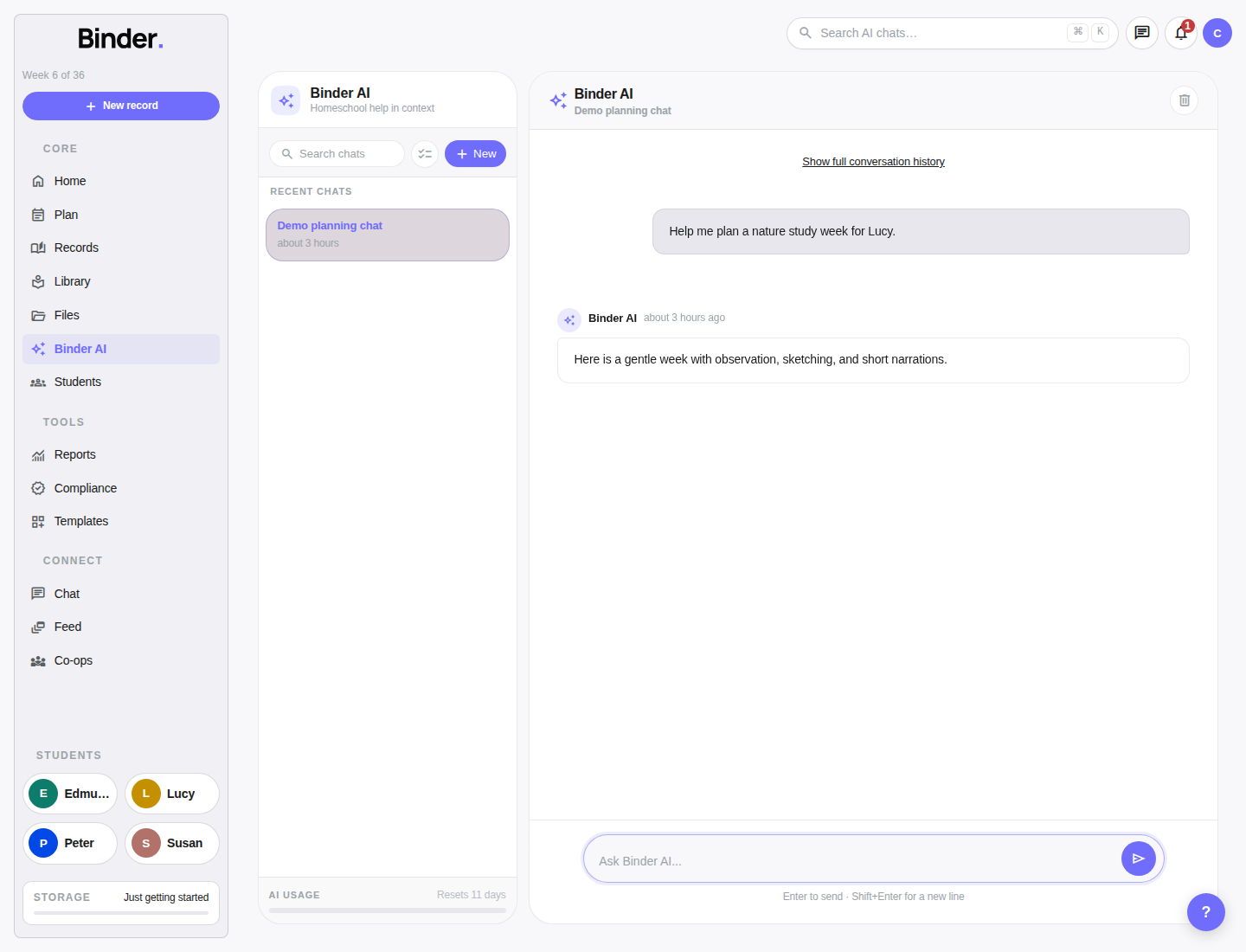
Binder AI can help draft lessons, summarize records, create progress notes, and suggest next steps, but parent approval remains the control point.
AI assistant. Start a conversation, review history, watch token usage, and approve or dismiss any proposed action before it changes homeschool data.
Account, storage, and billing
Account pages control personal settings, theme and method preferences, storage, subscription status, and billing actions.
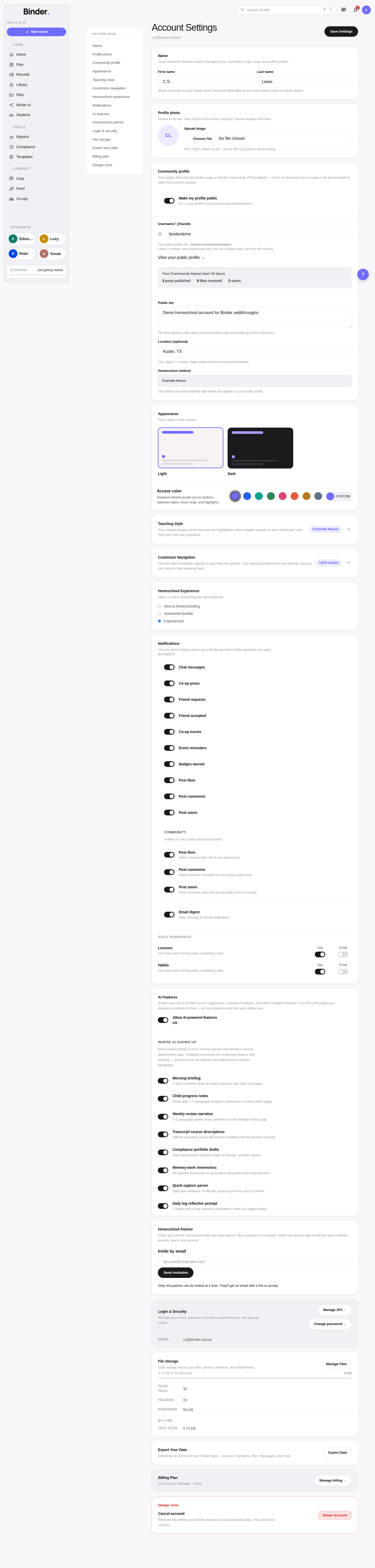
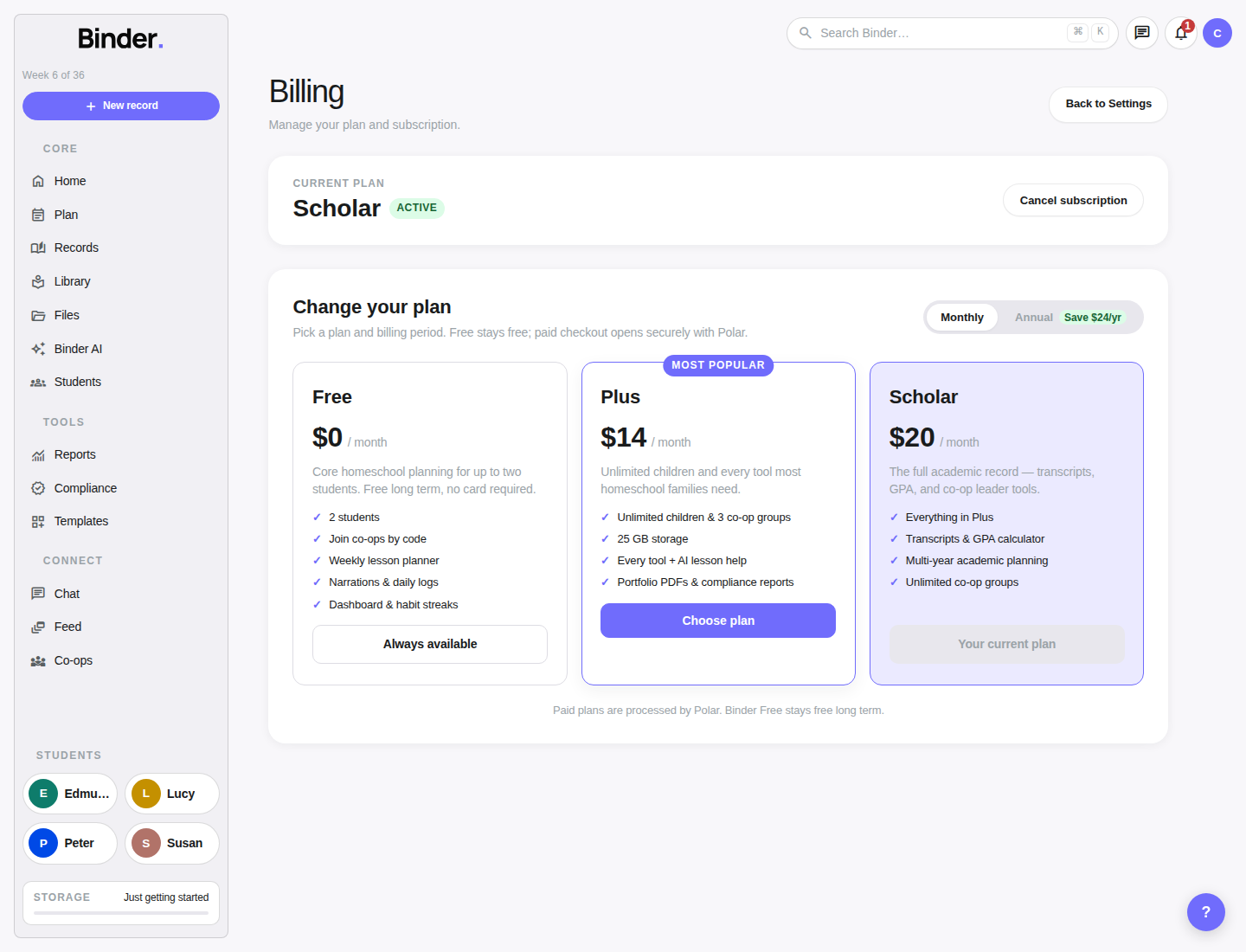
Account settings. Update profile details, homeschool preferences, theme, accent color, AI settings, and other account-level configuration.Billing. Review the current plan, compare available plans, upgrade, or open the billing portal. Plan entitlements affect students, storage, AI usage, transcripts, and exports.