Using Binder
App layout & navigation
Binder is organized around a few big ideas: Home for today’s picture, Plan for the calendar of lessons, Records for logging and compliance, Library for curriculum and files, and AI (when enabled) for drafting help. This page explains where those live on screen.
Layout screenshots
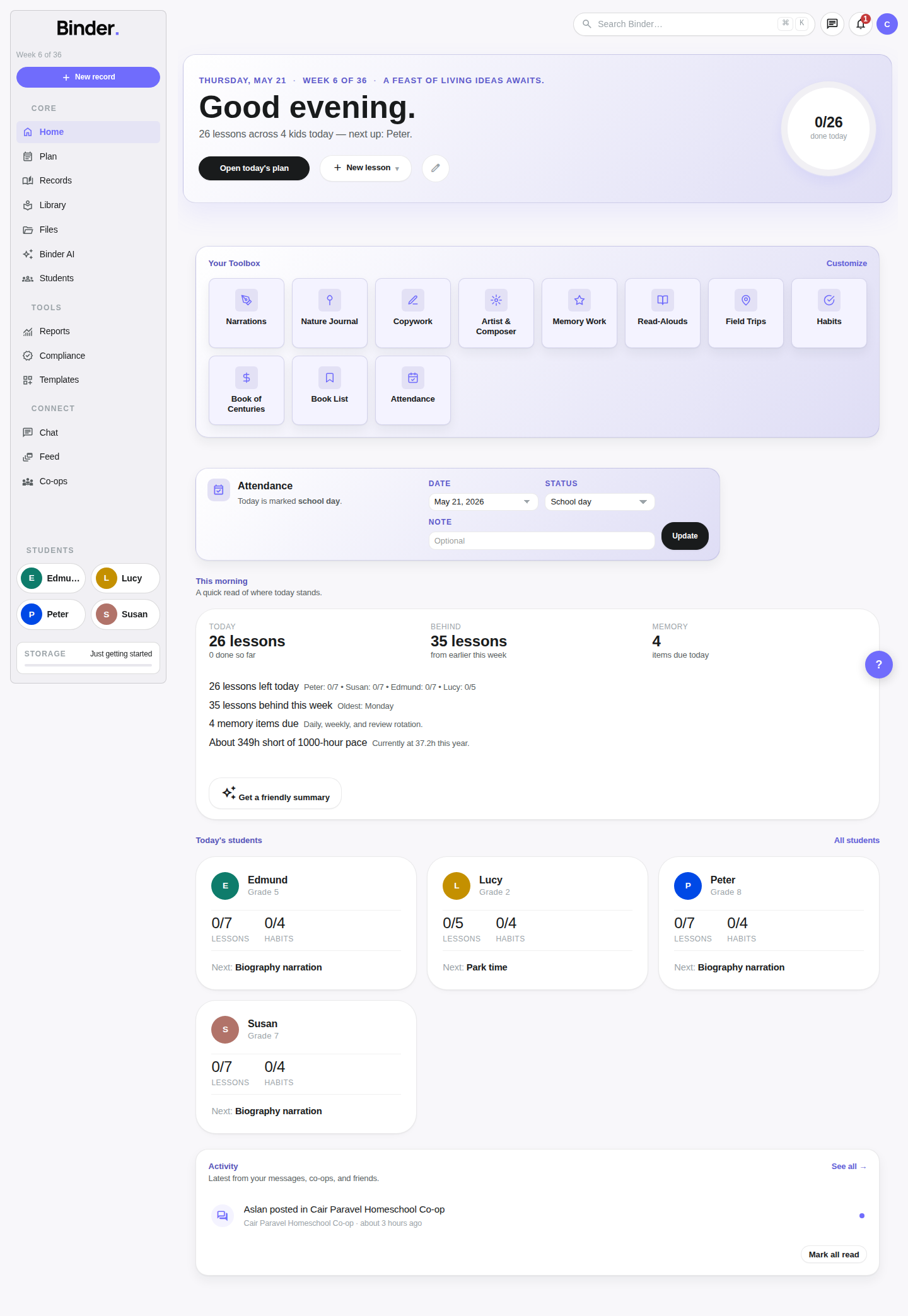
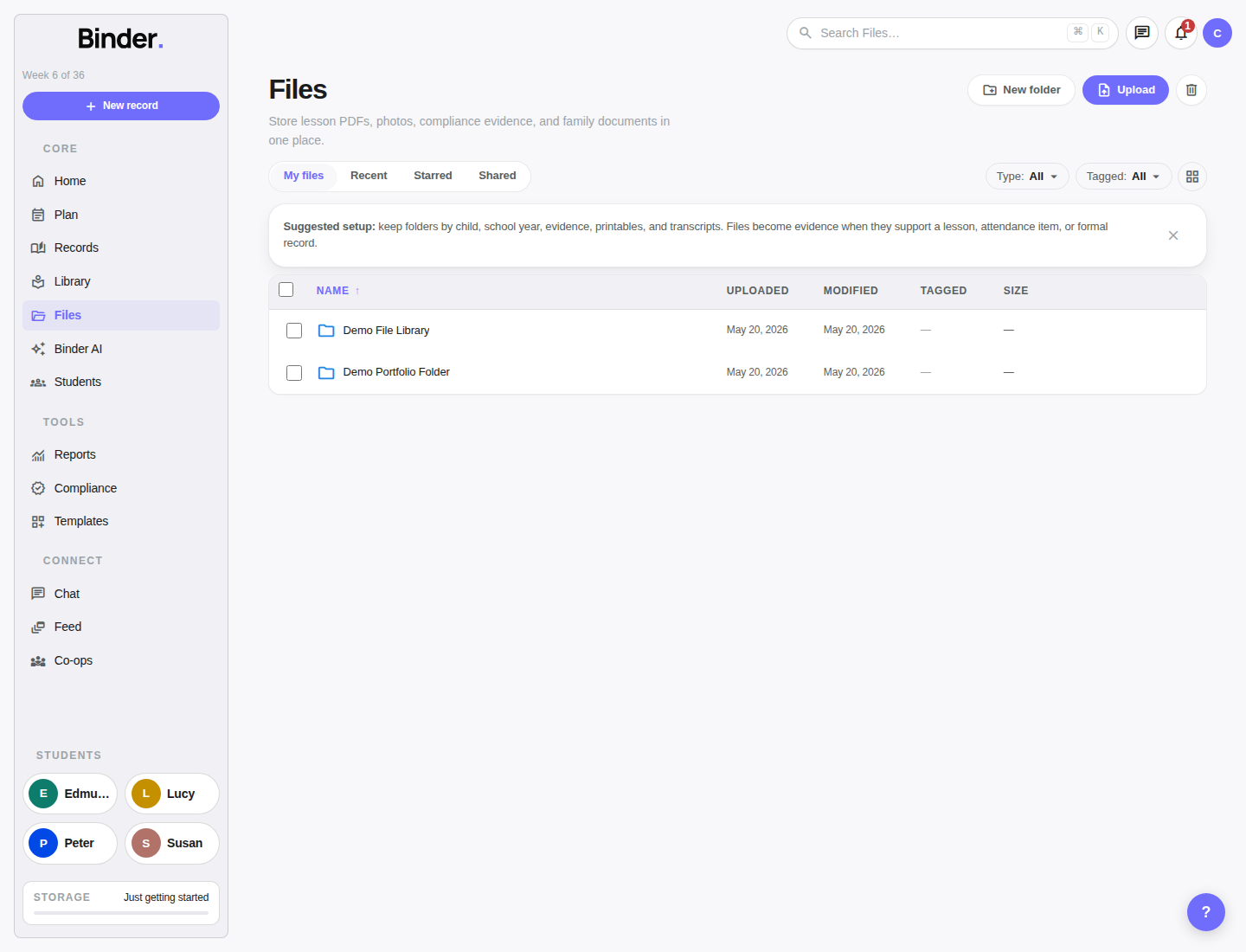
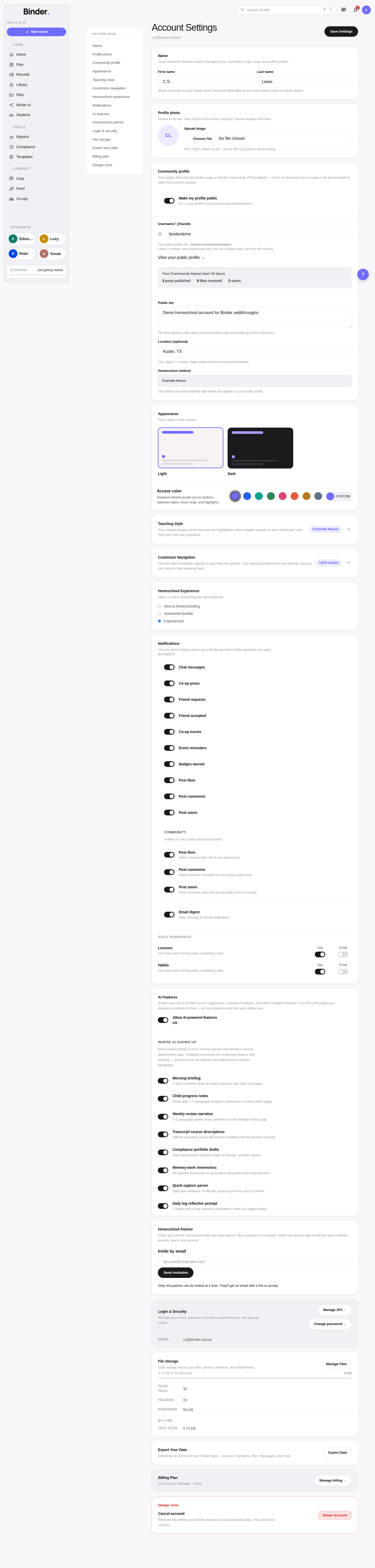
The core navigation pattern repeats across Binder: sidebar, top workspace tools, page content, and account actions.
Desktop: left sidebar
On a wide screen, the vertical sidebar on the left is your home base. Items are grouped into sections such as Navigate, Records, and Library. Click any link to open that area; the current page is highlighted.
At the top you will see the Binder wordmark (tap it to return to the dashboard). At the bottom, account shortcuts and settings live near your avatar or initials.
Workspace toolbar
Across the top of the main pane, a toolbar often includes search, quick actions, and context for where you are (for example the current child or term). On smaller laptops, some actions move into the user menu (your profile dropdown) to save space.
On mobile, extra links such as Find (library search) and Templates may appear inside that same user menu so they stay one tap away without crowding the tab bar.
Records vs Library — what is the difference?
Records is where day-to-day homeschool work is captured: lessons, narrations, daily logs, attendance, compliance, portfolios, transcripts, and similar. Think “things that happened in our school day.”
Library holds longer-lived reference material: subjects you teach, resources (curriculum links and notes), and the file manager for uploads. Think “things we use again and again.”
Mobile: bottom tab bar
On narrow viewports, Binder shows a fixed bottom tab bar with the highest-frequency areas: Home, Plan, Records, Library, Files, and optionally AI when your account has it enabled. The active item matches the section you are in.
You can still reach every other feature from menus, search, and in-page links — the tab bar is a fast map to the places families spend the most time.
Search
Global search (from the toolbar) finds lessons, children, files, and other objects across your account depending on context. Library file search is specialized for your uploads and supports filters described in the File manager guide.
This documentation site has its own search too — press ⌘K or Ctrl+K while reading Help Center articles.
Account, billing, and settings
Open your profile menu (avatar or initials) for Account, Billing, Settings (method, theme, AI preferences), and sign out. Partners you invite for co-parenting access the same household data from their own login.
Bookmarks and deep links
Almost every screen in Binder has its own URL. You can bookmark your planner, a child’s portfolio, or the attendance page in your browser. If you are signed out, Binder will ask you to sign in before continuing.